
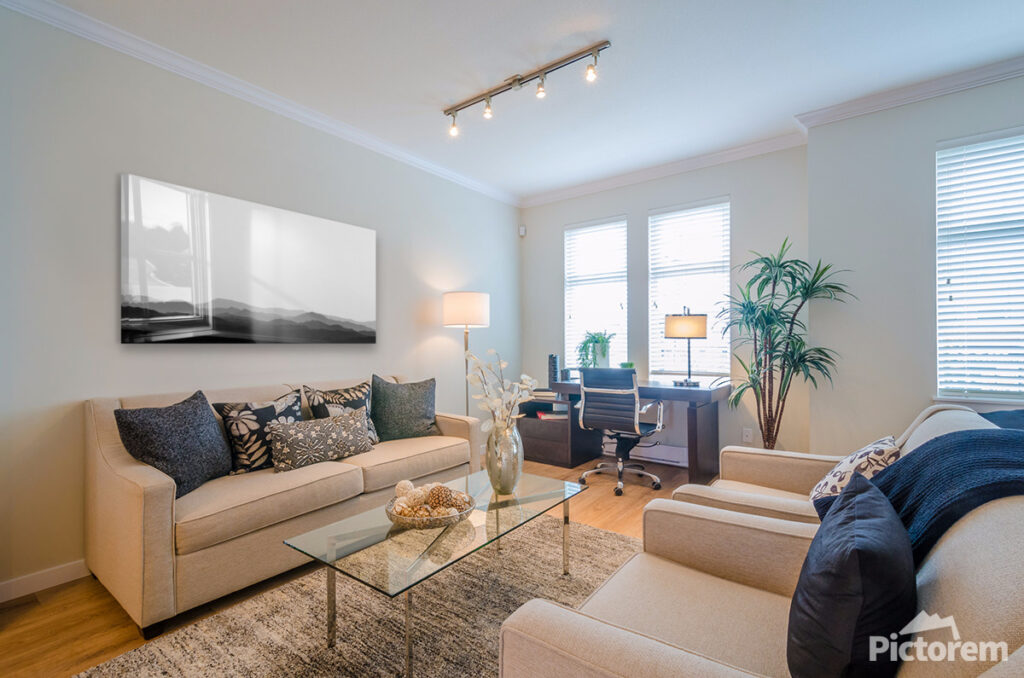
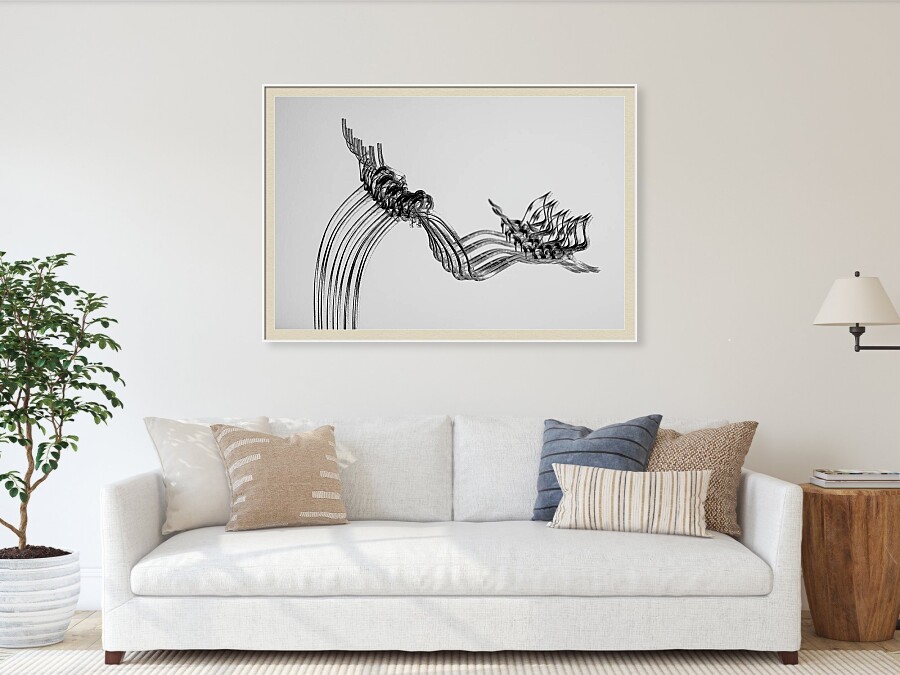
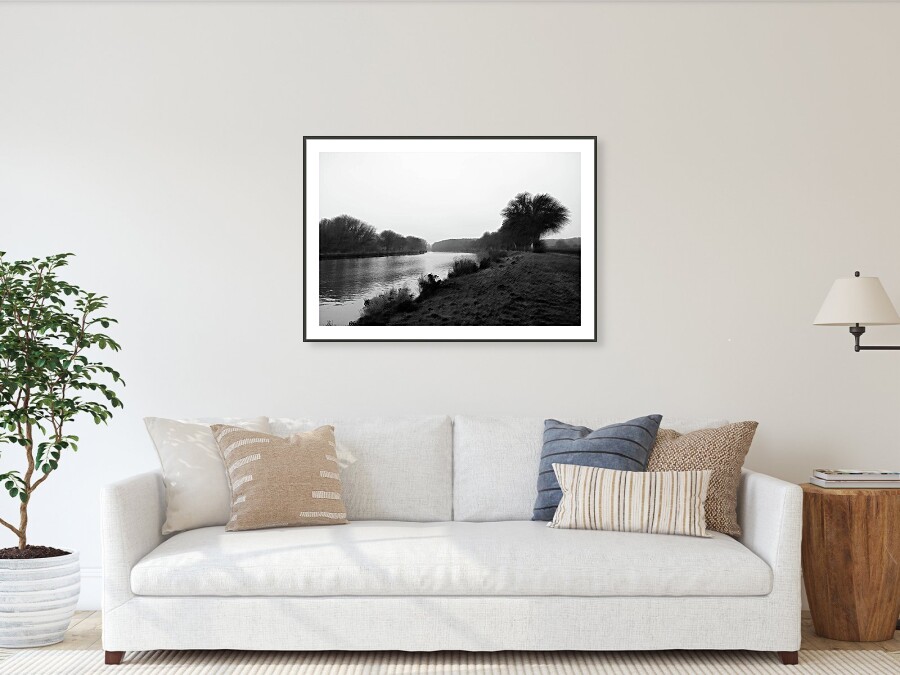
Large black and white photography prints can completely change the feeling of a room. A carefully chosen print is not just a decoration on the wall. It can become the visual center of an interior, add depth, create contrast, soften a minimalist space, or bring a quiet sense of atmosphere into a home, office, hotel, or studio.
In this guide, you will learn how to choose the right size, material, frame, placement and style of a large black and white photography print for a home, office, hotel, studio or interior design project.
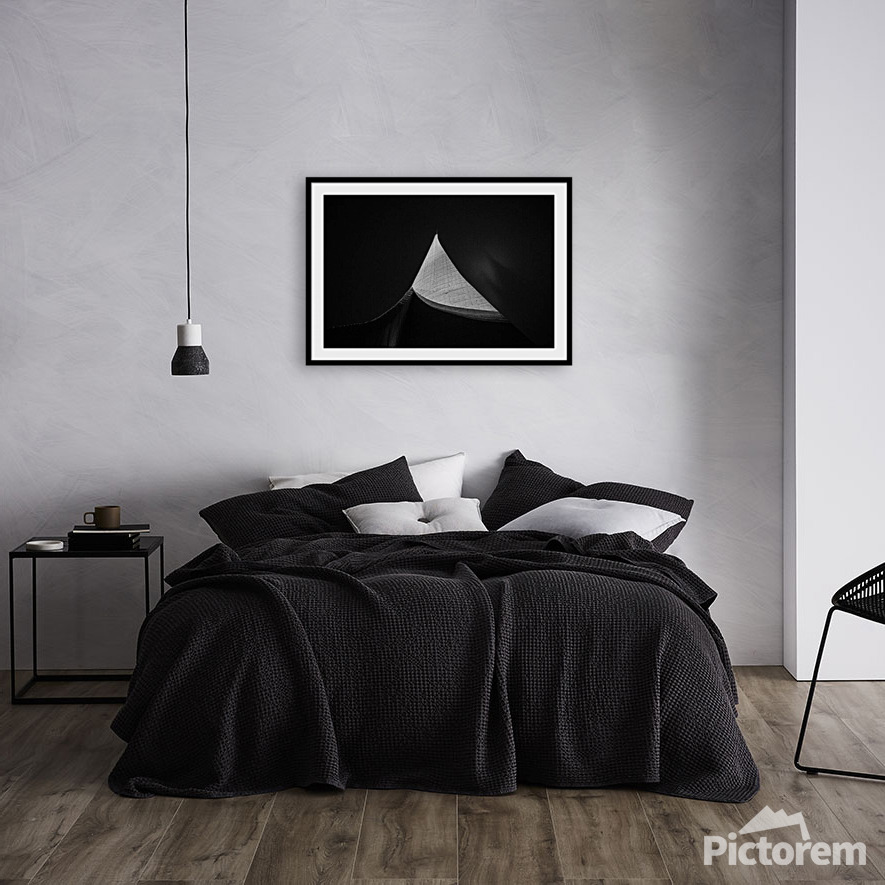
Who This Guide Is For
- Interior designers choosing artwork for client projects
- Homeowners decorating a living room, bedroom, hallway, or home office
- People furnishing apartments, houses, and private offices
- Architects and stylists working with visual atmosphere
- Businesses decorating offices, meeting rooms, receptions, hotels, restaurants, or studios
- Anyone considering a large black and white photographic print but unsure about size, material, or placement
Who This Guide Is For
- Interior designers choosing artwork for client projects
- Homeowners decorating a living room, bedroom, hallway, or home office
- People furnishing apartments, houses, and private offices
- Architects and stylists working with visual atmosphere
- Businesses decorating offices, meeting rooms, receptions, hotels, restaurants, or studios
- Anyone considering a large black and white photographic print but unsure about size, material, or placement
What Is a Large Black and White Photography Print?
A “large” photography print is not defined only by its exact dimensions. It is large in relation to the wall, the furniture, and the room around it.
A print becomes large when it has visual presence. It is no longer a small accessory. It becomes an intentional part of the interior design.
Common Size Categories
| Print Type | Typical Size Range | Best For |
|---|---|---|
| Small statement print | Around 40 × 60 cm / 16 × 24 in to 50 × 70 cm / 20 × 28 in | Smaller rooms, narrow walls, hallways, work corners, gallery walls |
| Medium-large print | Around 60 × 90 cm / 24 × 36 in to 70 × 100 cm / 28 × 40 in | Living rooms, bedrooms, offices, above cabinets, single feature walls |
| Large statement print | Around 80 × 120 cm / 32 × 48 in to 100 × 150 cm / 40 × 60 in and larger | Large walls, high ceilings, reception areas, modern interiors, hotel spaces |
| Oversized print | Larger than 100 × 150 cm / 40 × 60 in | Spacious interiors, commercial spaces, minimalist rooms, strong visual statements |
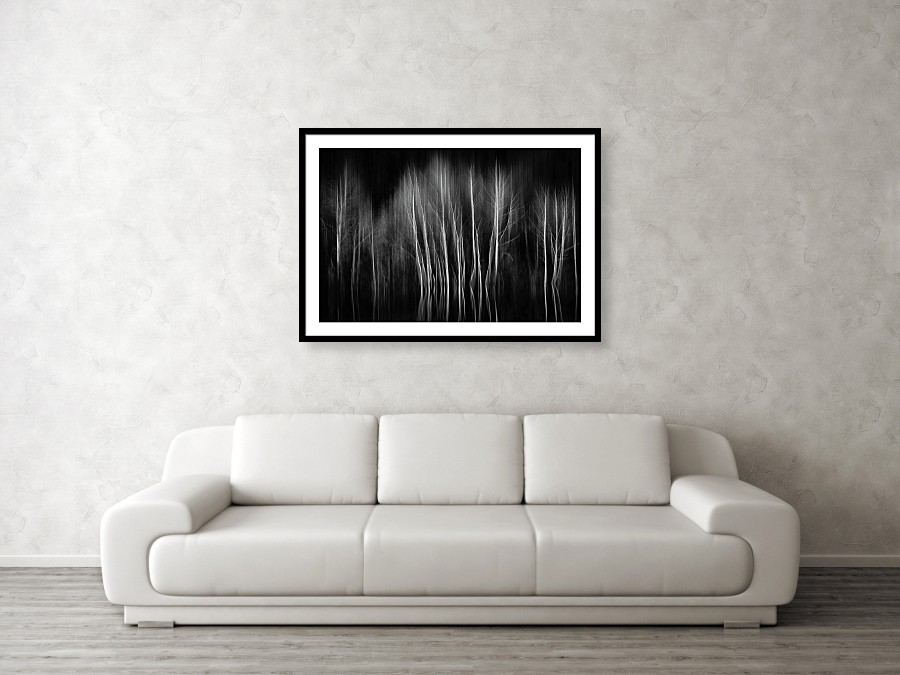
Why Choose Black and White Photography for Interior Design?
Black and white photography has several advantages that make it especially useful for interiors.
Key Benefits
| Benefit | Why It Matters in an Interior |
|---|---|
| Timeless appearance | Black and white prints are less tied to color trends and can remain relevant for many years. |
| Easy to combine | They work with many palettes, including neutral, warm, dark, industrial, and colorful interiors. |
| Strong visual focus | Without color, the viewer notices light, form, texture, composition, and atmosphere. |
| Elegant contrast | A monochrome print can add visual structure to a calm or minimal room. |
| Professional look | Large black and white photographs are suitable for offices, meeting rooms, hotels, and reception areas. |
| Flexible mood | Depending on the subject, they can feel peaceful, architectural, dramatic, poetic, minimal, or bold. |
When Black and White Works Especially Well
Black and white photography is a strong choice when:
- The room already contains several colors and you do not want to add another one
- The interior is minimalist and needs one strong visual element
- You want artwork that feels calm but not boring
- The space uses natural materials such as wood, stone, concrete, or linen
- You want a print that feels more timeless than decorative trends
- You are decorating a professional space and want a refined, non-distracting artwork
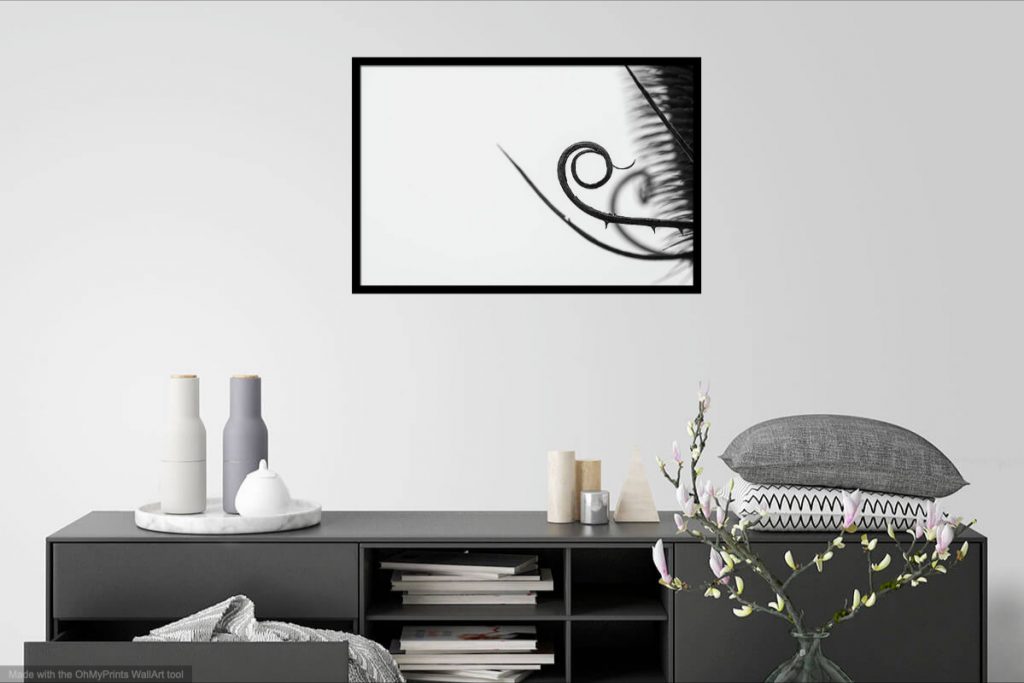
How to Choose the Right Print Size
Choosing the size is often the hardest part of ordering a large photography print. Many people choose artwork that is too small, especially for large walls or spaces above sofas and beds.
A good print size should relate to:
- The size of the wall
- The width of nearby furniture
- The height of the ceiling
- The viewing distance
- The role of the print in the room
- Whether the print will be framed, matted, or displayed without a frame
Start With the Wall, Not the Photograph
Before choosing a print, measure the place where it will hang.
Measure:
- The width of the wall
- The height between furniture and ceiling
- The width of the sofa, bed, cabinet, or desk below the print
- The distance from which people will usually view the artwork
- The available space around doors, windows, shelves, lamps, and switches
This prevents one of the most common mistakes: falling in love with a photograph and then ordering a size that does not work well in the room.
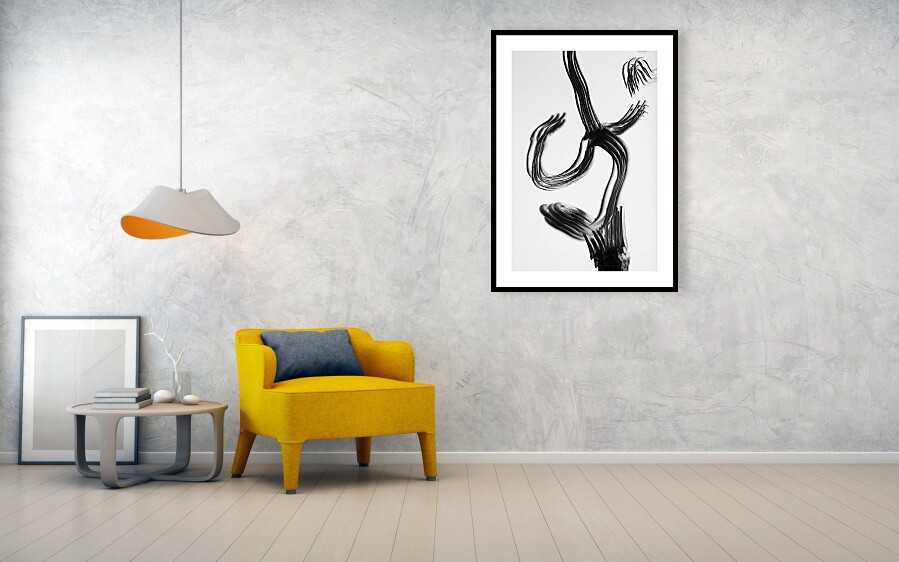
Size Guide by Placement
Above a Sofa
A print above a sofa should usually be wide enough to connect with the furniture below it visually.
The artwork should be approximately 60–75% of the sofa width.
For example:
| Sofa Width | Suggested Artwork Width |
|---|---|
| 180 cm / 71 in | 110–135 cm / 43–53 in |
| 220 cm / 87 in | 130–165 cm / 51–65 in |
| 260 cm / 102 in | 155–195 cm / 61–77 in |
| 300 cm / 118 in | 180–225 cm / 71–89 in |
A single large black and white print often works better above a sofa than several small pictures. It creates a calmer and more intentional result.
Above a Bed
For a print above a bed, the same principle applies. The artwork should relate to the width of the bed and should not look lost on the wall.
Good options include:
- One wide horizontal print above the headboard
- One large vertical print placed slightly off-center
- Two or three related prints in a clean arrangement
- A calm landscape, abstract detail, or minimal photograph with softer contrast
In a Hallway
Hallways are often narrow, so the viewing distance is shorter. This changes the way size works.
Good choices for hallways:
- Vertical black and white prints
- A sequence of smaller framed photographs
- Strong compositions that work from close distance
- Minimal subjects with clear shapes
- Narrow horizontal prints for long walls
In a Home Office
A large black and white print can make a home office feel more considered and professional.
Good placements include:
- Behind the desk as a video-call background
- On a side wall where it supports concentration
- Above a low cabinet
- Opposite the desk as a visual break from screens
In a Corporate Office or Meeting Room
Black and white photography is often a good choice for professional interiors because it feels serious, refined, and less distracting than colorful artwork.
Suitable spaces include:
- Reception areas
- Meeting rooms
- Executive offices
- Hallways
- Client rooms
- Quiet zones
- Creative studios
For corporate spaces, the image should match the atmosphere of the brand without feeling like corporate decoration. A well-chosen fine art photograph can make the space feel more human and more memorable.
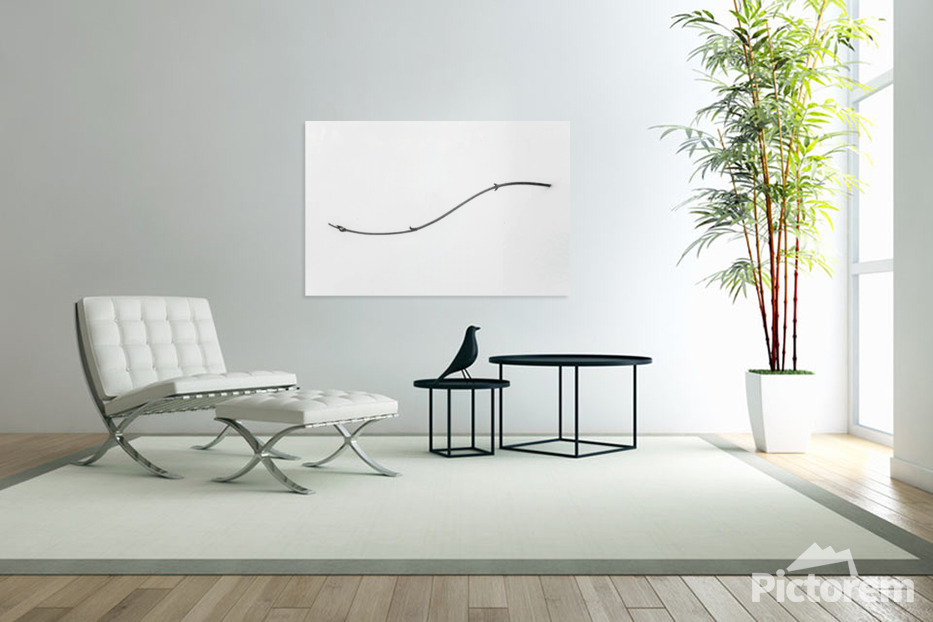
Viewing Distance: Why It Matters
The larger the viewing distance, the larger the print can be.
A print seen from across a living room, reception, or meeting room needs more scale than a print viewed from a narrow hallway. In a small room, however, this does not always mean you need a small print. One large print can often make a small room feel cleaner and more intentional than several small decorations.
Simple Viewing Distance Guide
| Viewing Distance | Print Size That Often Works Well |
|---|---|
| 1–2 m / 3–6 ft | Smaller or medium prints; strong details can be appreciated up close |
| 2–3 m / 6–10 ft | Medium-large prints; good for bedrooms, offices, and smaller living rooms |
| 3–5 m / 10–16 ft | Large statement prints; good for living rooms and meeting rooms |
| 5 m+ / 16 ft+ | Oversized prints; suitable for lobbies, large walls, hotels, and open spaces |
How to Test the Size Before Ordering
Testing size before ordering is one of the easiest ways to avoid mistakes.
1. Use Painter’s Tape
Mark the outer edges of the planned print directly on the wall with painter’s tape.
Then look at it from different points in the room:
- From the doorway
- From the sofa or bed
- From the desk
- From the opposite wall
- While walking through the space
2. Make a Paper Template
Use wrapping paper, cardboard, newspaper, or several sheets of paper taped together. Cut or assemble the exact size of the print and place it on the wall.
This method is especially helpful for large and oversized prints.
3. Photograph the Wall
Take a straight photo of the wall and add a rough rectangle or artwork preview digitally. This is useful for interior designers presenting options to clients.
4. Test More Than One Size
If you are unsure, compare two or three possible dimensions. Many people discover that the larger option looks more natural once they see it on the wall.
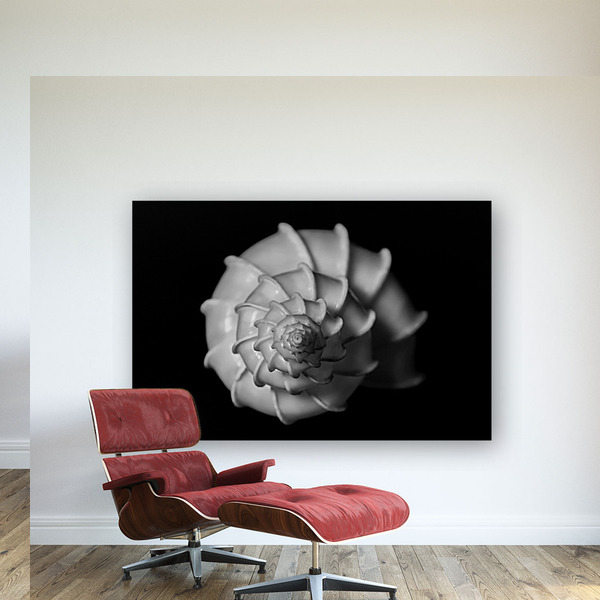
Choosing the Right Subject
The subject of the photograph should support the atmosphere of the room.
Black and white photography can be quiet, dramatic, minimal, organic, architectural, abstract, or emotional. The right choice depends on what the space needs.
Choose by Mood
| Desired Atmosphere | Suitable Subjects |
|---|---|
| Calm and peaceful | Mist, water, snow, soft landscapes, minimal nature details |
| Elegant and timeless | Fine art landscapes, architectural details, subtle abstract compositions |
| Modern and minimal | Geometric forms, clean compositions, negative space, simple textures |
| Dramatic and bold | High-contrast landscapes, dark tones, strong light and shadow |
| Professional and refined | Architecture, city structures, abstract textures, balanced compositions |
| Warm and natural | Trees, organic shapes, soft light, natural patterns |
| Creative and distinctive | Experimental photography, multiple exposure, unusual perspectives, abstract details |
Choose by Interior Style
Minimalist Interiors
Minimalist spaces often work best with prints that have clean composition, negative space, simple forms, and restrained contrast. A single large print can become the main visual element without making the room feel busy.
Scandinavian Interiors
Scandinavian interiors often pair well with lighter black and white prints, nature subjects, forests, snow, water, and soft tonal transitions. Natural wood frames can also work beautifully.
Industrial Interiors
Industrial spaces can handle stronger contrast, architecture, concrete, steel, urban scenes, and graphic compositions. Black frames or metal prints may fit this style well.
Elegant or Luxury Interiors
For elegant interiors, focus on image quality, framing, and restraint. A large print should feel intentional and refined, not loud. Fine art paper in a high-quality frame is often the best choice.
Creative Studios
Studios, agencies, and creative offices can use bolder subjects: abstract textures, experimental compositions, unusual forms, and more expressive photography.
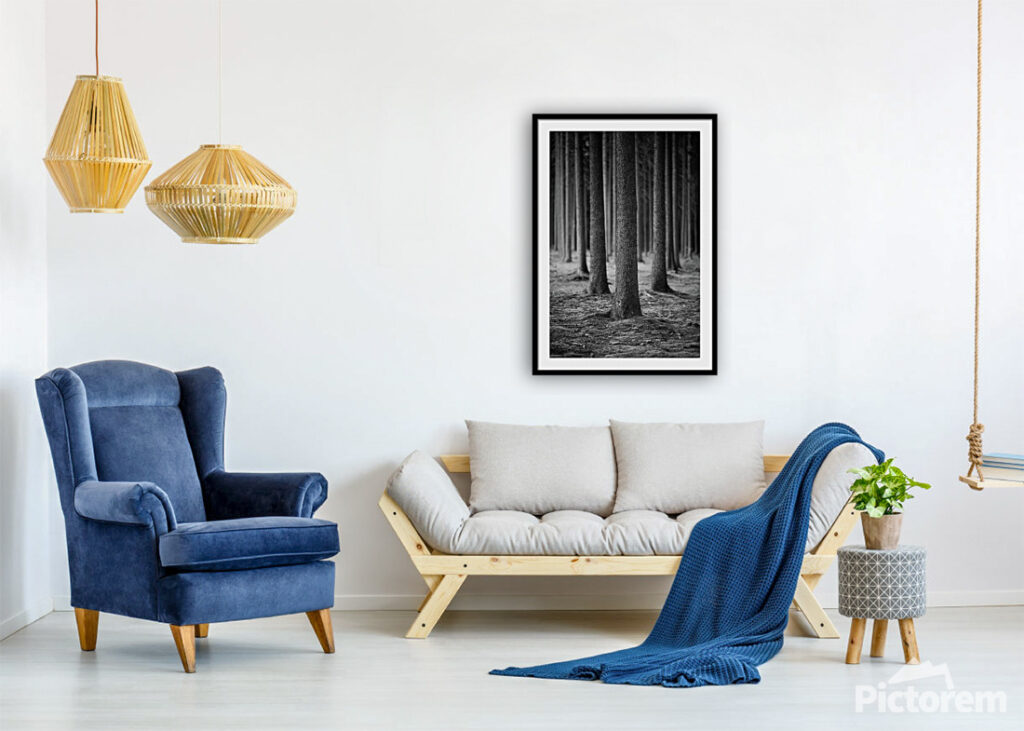
Contrast and Tonality
In black and white photography, contrast matters as much as color would in a color print.
A photograph with soft gray tones creates a different feeling than a print with deep blacks and bright whites.
Types of Black and White Prints
| Tonal Style | Visual Effect | Best For |
|---|---|---|
| Soft grayscale | Calm, quiet, subtle | Bedrooms, reading corners, Scandinavian interiors |
| High contrast | Bold, graphic, dramatic | Living rooms, offices, industrial interiors, statement walls |
| Dark and moody | Intimate, dramatic, atmospheric | Elegant spaces, private rooms, restaurants, lounges |
| Light and airy | Clean, minimal, spacious | Small rooms, white interiors, calm modern spaces |
| Detailed and textured | Tactile, organic, engaging | Offices, hallways, studios, spaces viewed up close |
A large print with strong contrast will dominate the room more than a softer print of the same size. This is not a problem, but it should be intentional.
Orientation: Horizontal, Vertical, Square, or Panoramic?
The orientation of the print should match the wall and the furniture around it.
Horizontal Prints
Horizontal photographs work well:
- Above sofas
- Above beds
- Above long cabinets
- In meeting rooms
- On wide walls
- In spaces where you want a calm, stable feeling
They visually extend the room and often feel balanced above furniture.
Vertical Prints
Vertical photographs work well:
- On narrow walls
- Between windows
- Beside doors
- In hallways
- In rooms with high ceilings
- In corners that need visual height
Vertical prints can make a room feel taller and more elegant.
Square Prints
Square prints work well:
- In symmetrical interiors
- Above smaller furniture
- As part of a grid or gallery wall
- In modern interiors
- When the photograph has a centered or balanced composition
Square formats feel calm and stable.
Panoramic Prints
Panoramic prints work well:
- Above long sofas
- In offices and hotel rooms
- On wide empty walls
- In hallways
- In minimalist spaces
They need enough width around them. A panoramic print placed on a wall that is too narrow can feel compressed.
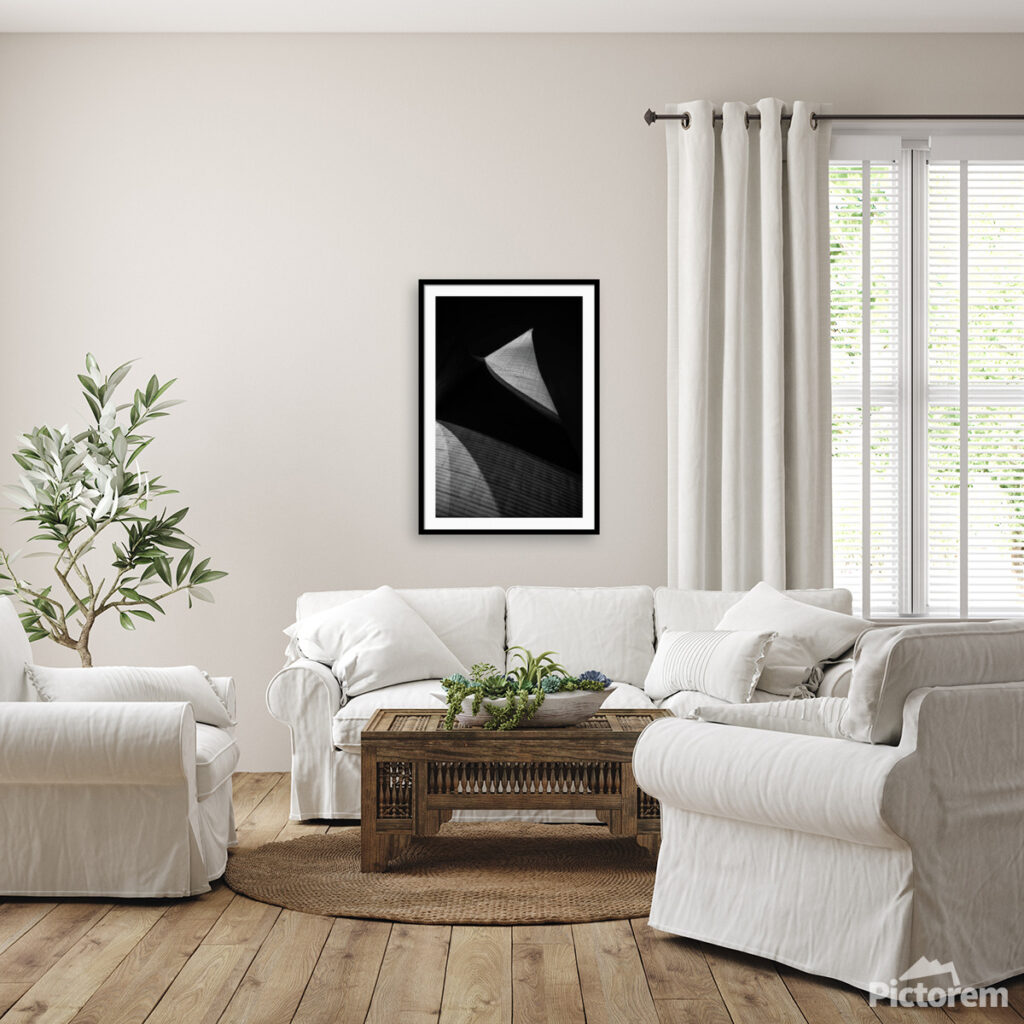
Materials for Large Black and White Photography Prints
The material affects the final appearance as much as the photograph itself. The same image can feel very different on fine art paper, canvas, acrylic, or metal.
Material Comparison Table
| Material | Look & Feel | Main Advantages | Possible Drawbacks | Best For |
|---|---|---|---|---|
| Fine art paper | Classic, refined, gallery-like | Excellent detail, elegant surface, strong artistic quality | Usually needs framing, more delicate handling | Homes, galleries, bedrooms, living rooms, elegant offices |
| Framed fine art print | Complete, polished, ready to hang | Professional finish, protected print, easy installation | Larger framed works need careful shipping and hanging | Interior designers, homes, offices, premium spaces |
| Canvas | Softer, more decorative | Lightweight, no glass, works well large | Texture can reduce sharpness of fine detail | Hotels, apartments, relaxed interiors |
| Acrylic | Glossy, modern, high contrast | Strong visual impact, depth, contemporary look | Reflections, less subtle surface | Modern homes, offices, receptions, showrooms |
| Metal | Sleek, durable, contemporary | Strong, frameless, good for public spaces | Can feel cold, not ideal for every photograph | Offices, industrial interiors, commercial spaces |
Fine Art Paper
Fine art paper is one of the best choices for black and white photography when you want a refined, gallery-quality result.
It is especially suitable for prints where detail, tonal range, and surface quality matter. Fine art paper can preserve subtle transitions between black, white, and gray. It gives the photograph a tactile, elegant presence.
Pros of Fine Art Paper
- Excellent for black and white tonal detail
- Elegant, classic, and gallery-like appearance
- Suitable for high-quality framing
- Works well in living rooms, bedrooms, offices, and art-focused interiors
- Often the best choice for a refined photographic print
Cons of Fine Art Paper
- Usually needs framing
- More sensitive to moisture and handling
- Requires careful protection during shipping and installation
- Large sizes may need professional framing or acrylic glazing
Best Use Cases
Choose fine art paper if you want the print to feel like a true photographic artwork rather than a decorative panel.
Framed Fine Art Prints
A framed print is often the best choice when you want a finished piece ready to hang.
For interior designers, framed prints are practical because they reduce the number of separate decisions. The print, frame, protection, and hanging preparation can be considered as one complete object.
Pros of Framed Prints
- Ready to hang
- Professional and finished appearance
- Protects the photograph
- Easier to present as a complete interior solution
- Works well in homes, offices, hotels, and premium projects
Cons of Framed Prints
- Larger framed prints are heavier
- Shipping requires more protective packaging
- Frame choice must be carefully matched to the interior
- High-quality framing increases the final price
Common Frame Choices
| Frame Type | Effect |
|---|---|
| Black frame | Strong, clean, universal, especially good for black and white photography |
| White frame | Light, subtle, calm, good for bright interiors |
| Natural wood frame | Warm, organic, good with wood furniture and natural interiors |
| Dark wood frame | Elegant, classic, refined |
| Thin minimalist frame | Modern, discreet, suitable for contemporary spaces |
Canvas Prints
Canvas prints have a softer and more decorative appearance than fine art paper. They can work well in relaxed interiors, hospitality spaces, and large rooms where a lighter object without glass is useful.
Pros of Canvas
- Lightweight compared with framed glass prints
- No glazing or reflections
- Works well in large formats
- Softer, warmer appearance
- Can be suitable for hotels, apartments, and informal spaces
Cons of Canvas
- Canvas texture changes the look of the photograph
- Fine details may appear less sharp
- Not every black and white photograph works well on canvas
- It may feel more decorative and less gallery-like than paper
Best Use Cases
Canvas is a good option when you want a large, soft-looking print without glass and with less formal presentation.
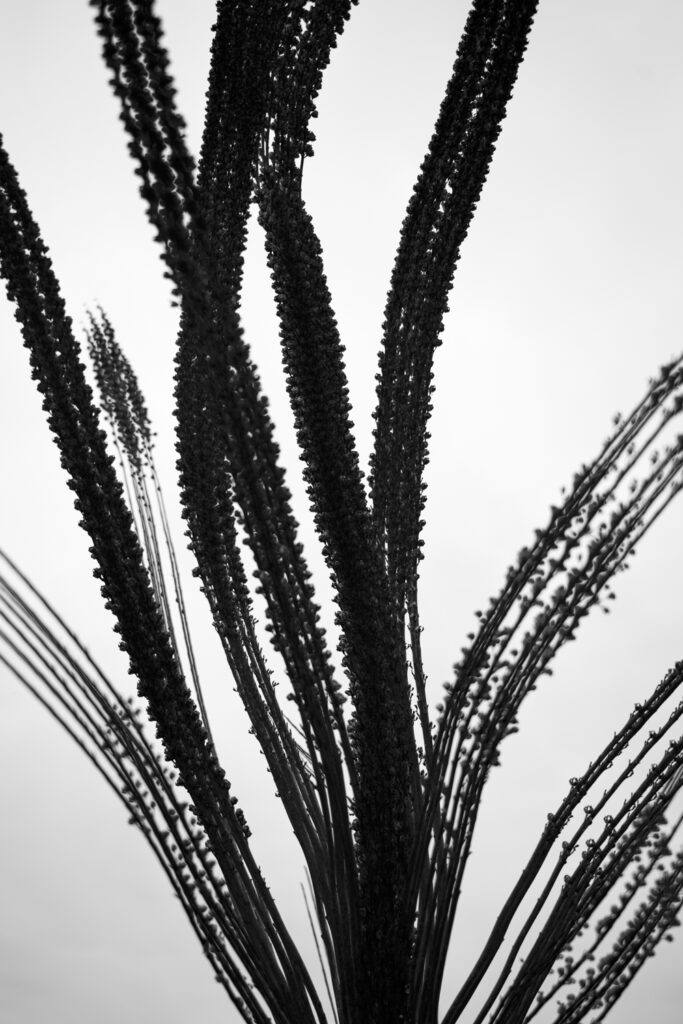
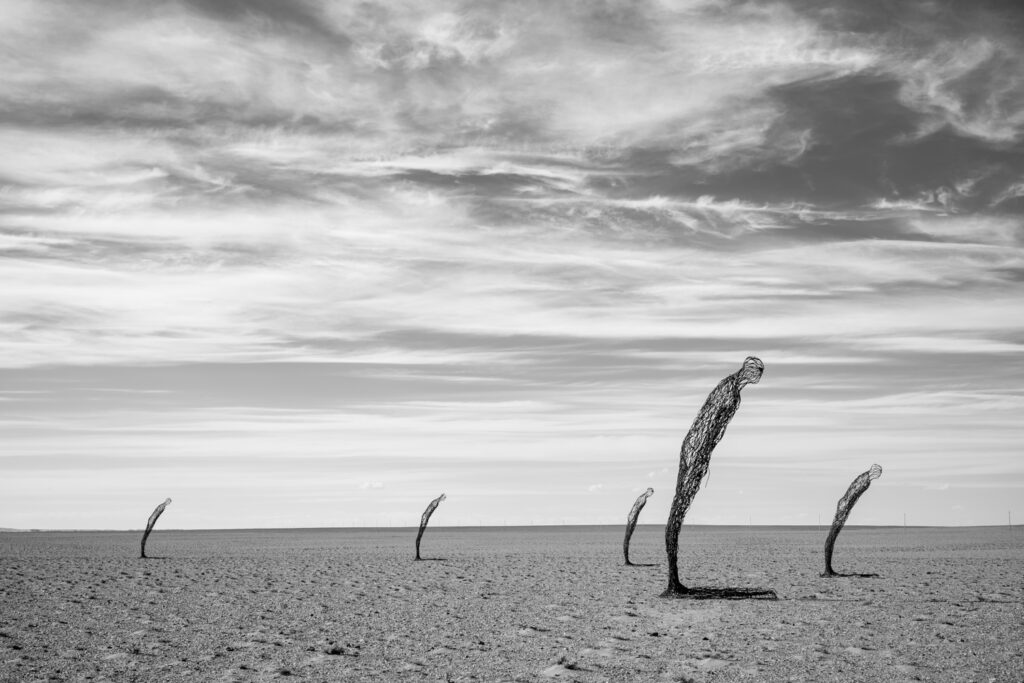
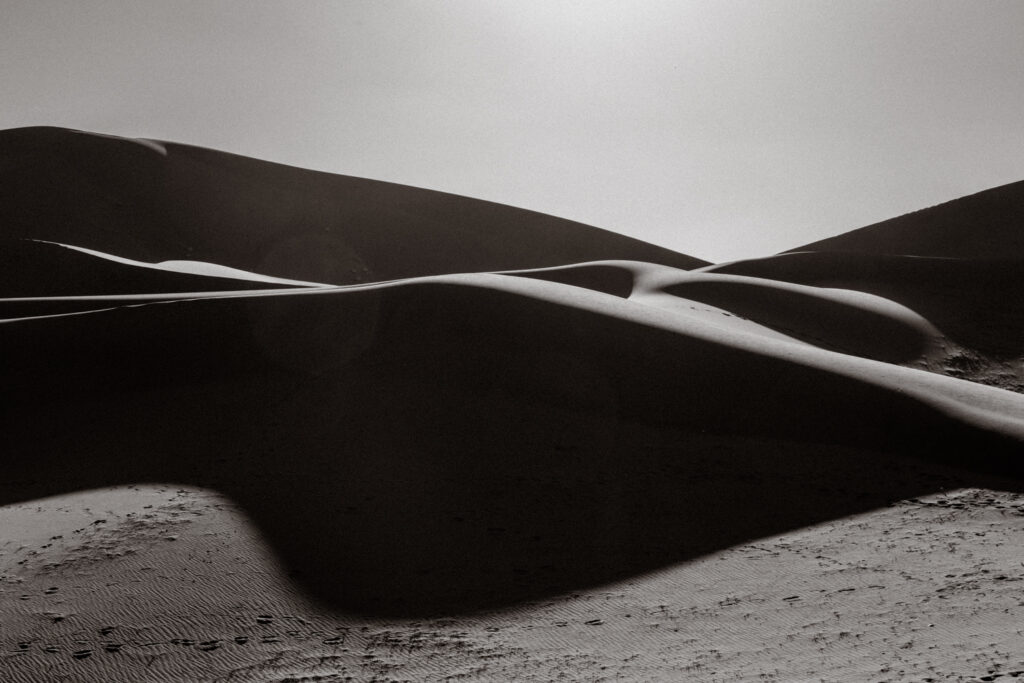
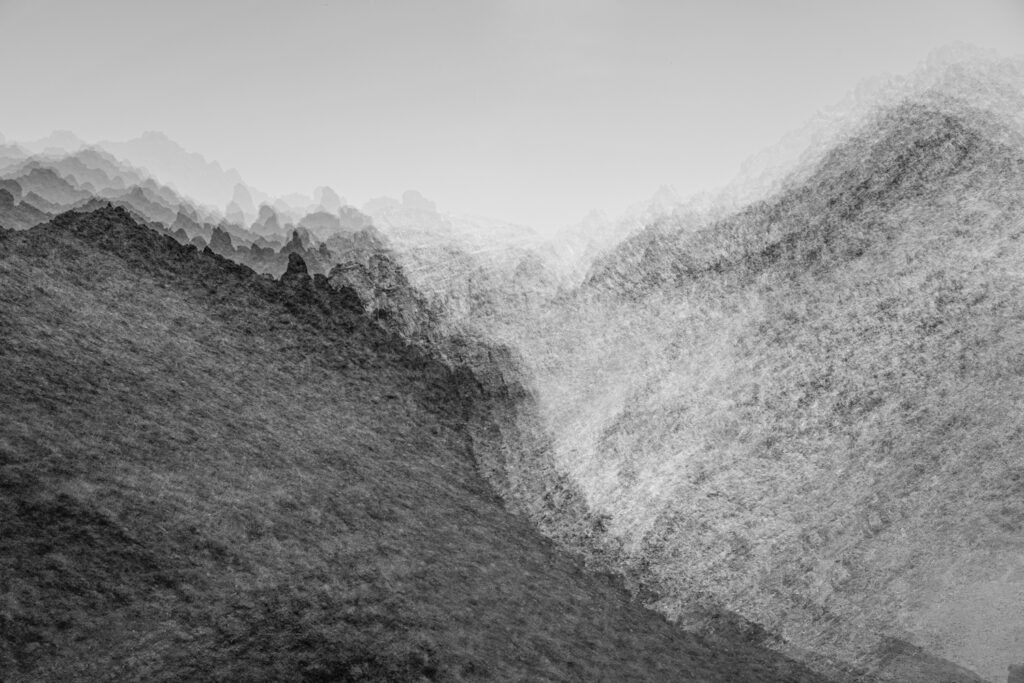
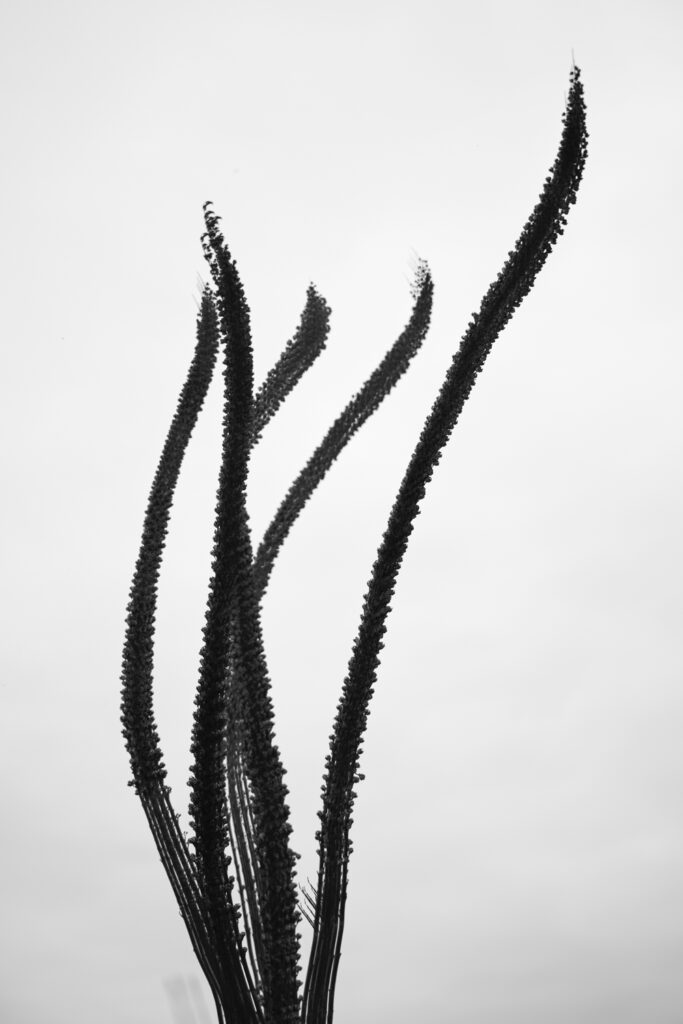
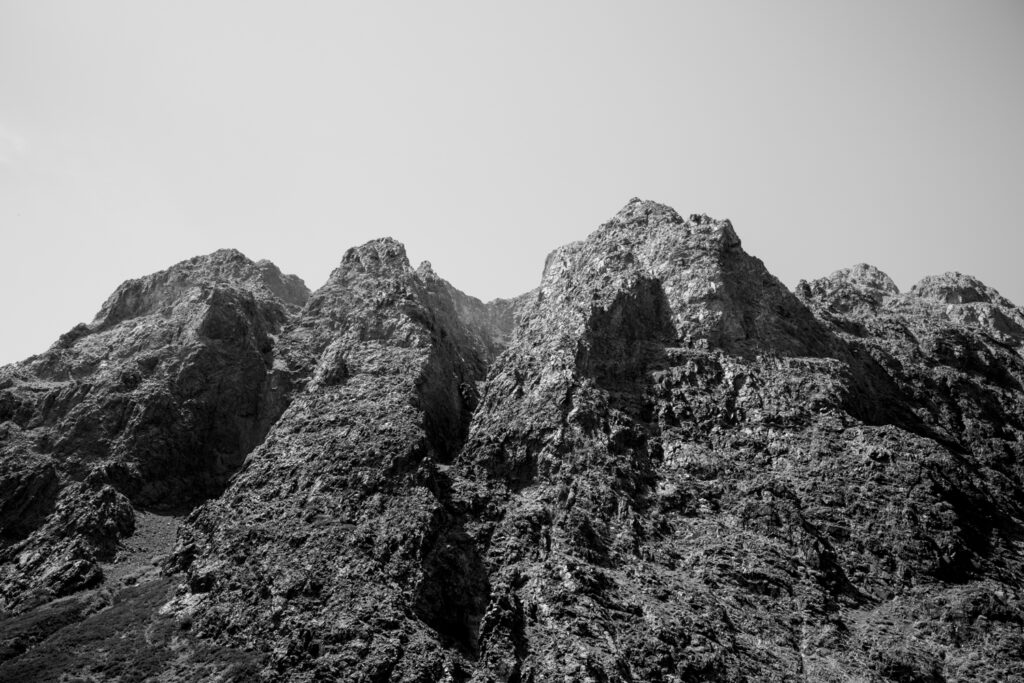
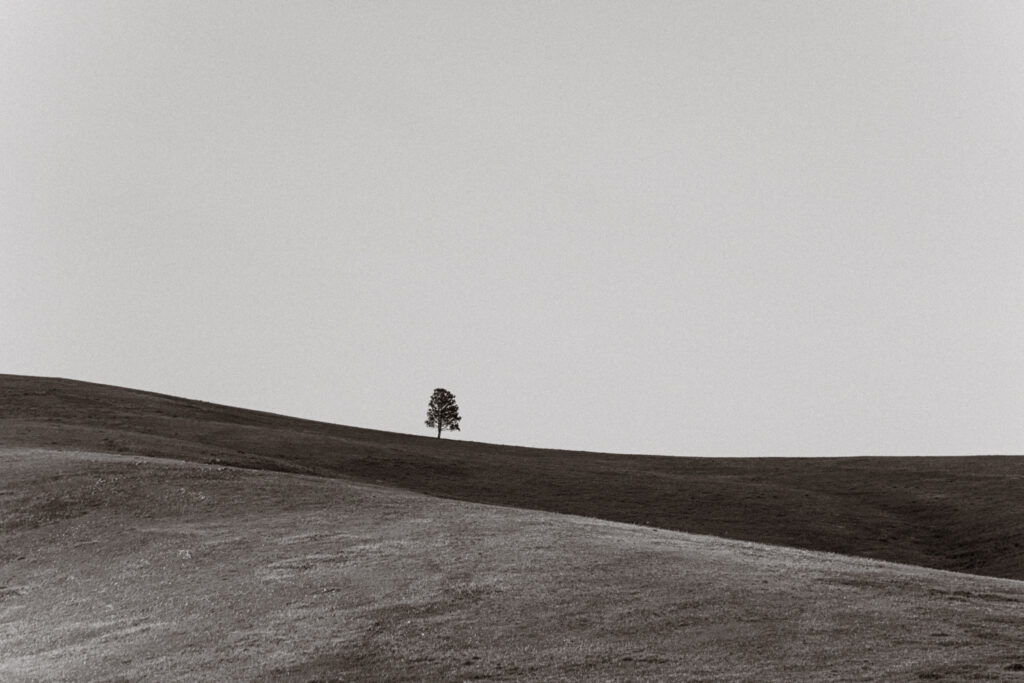
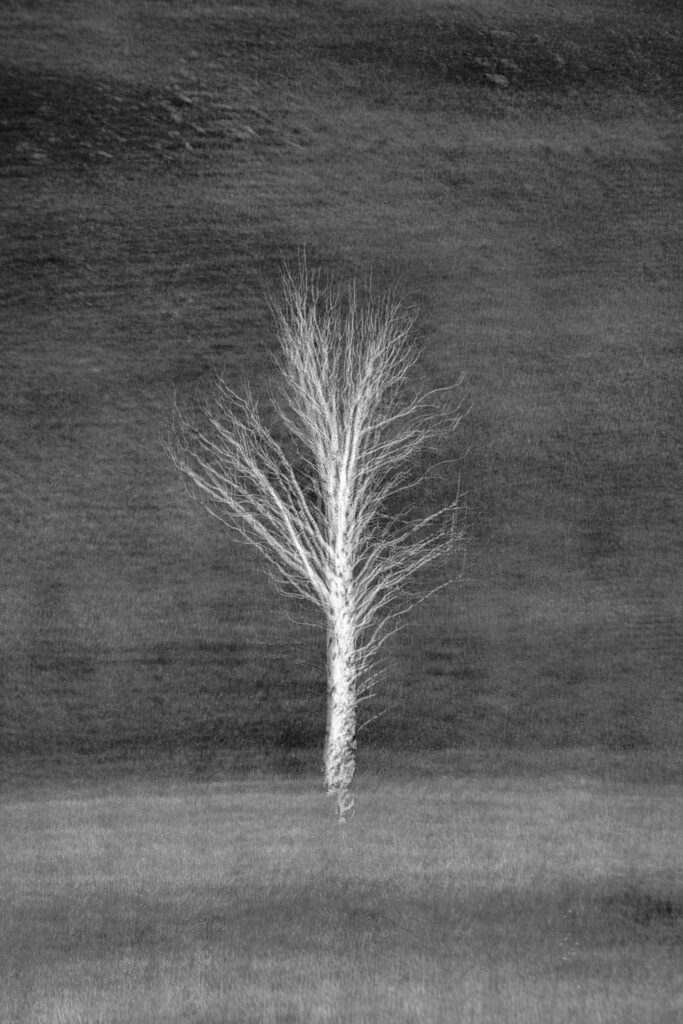
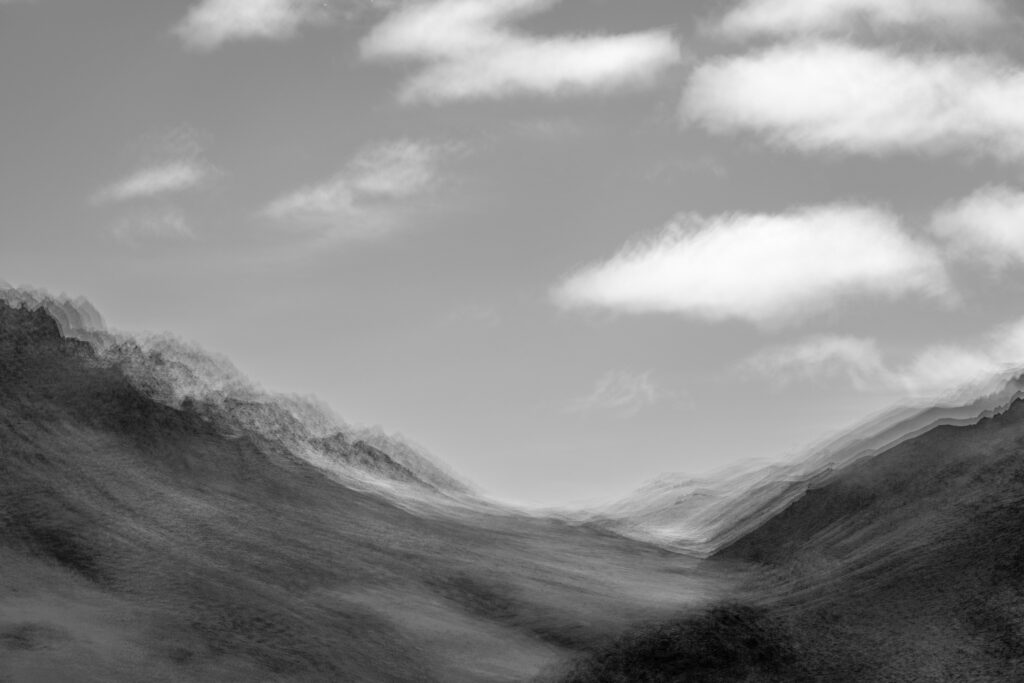
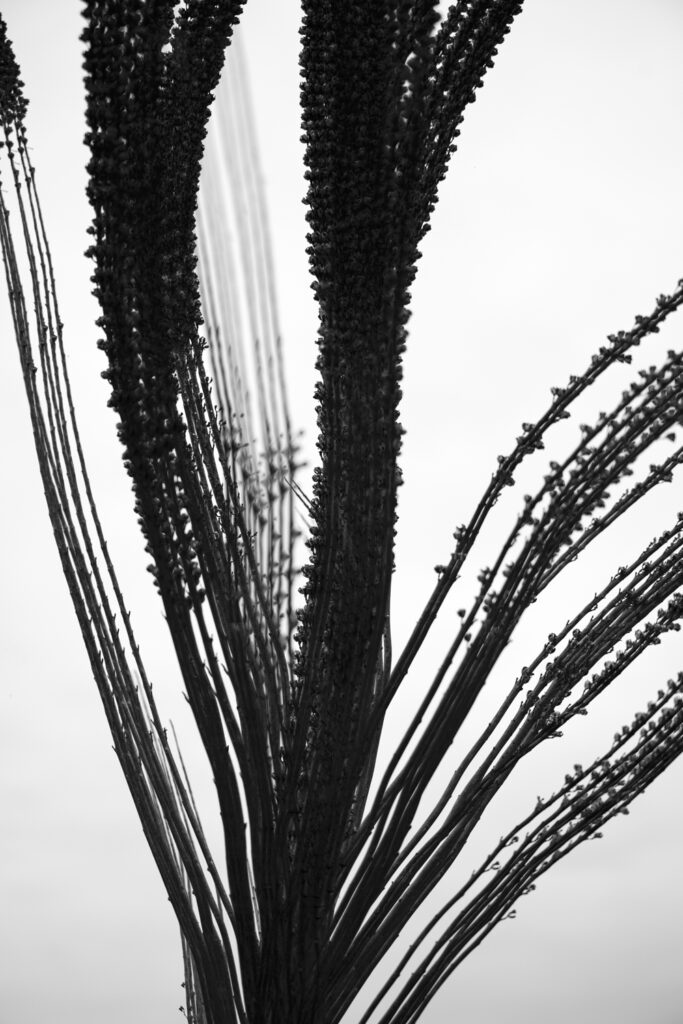
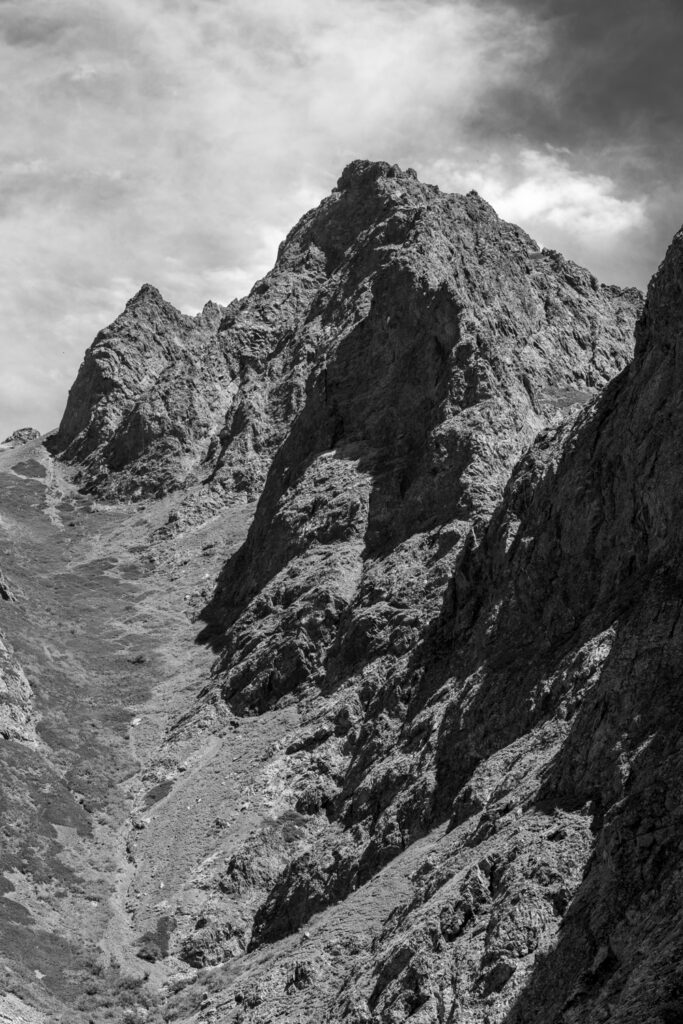
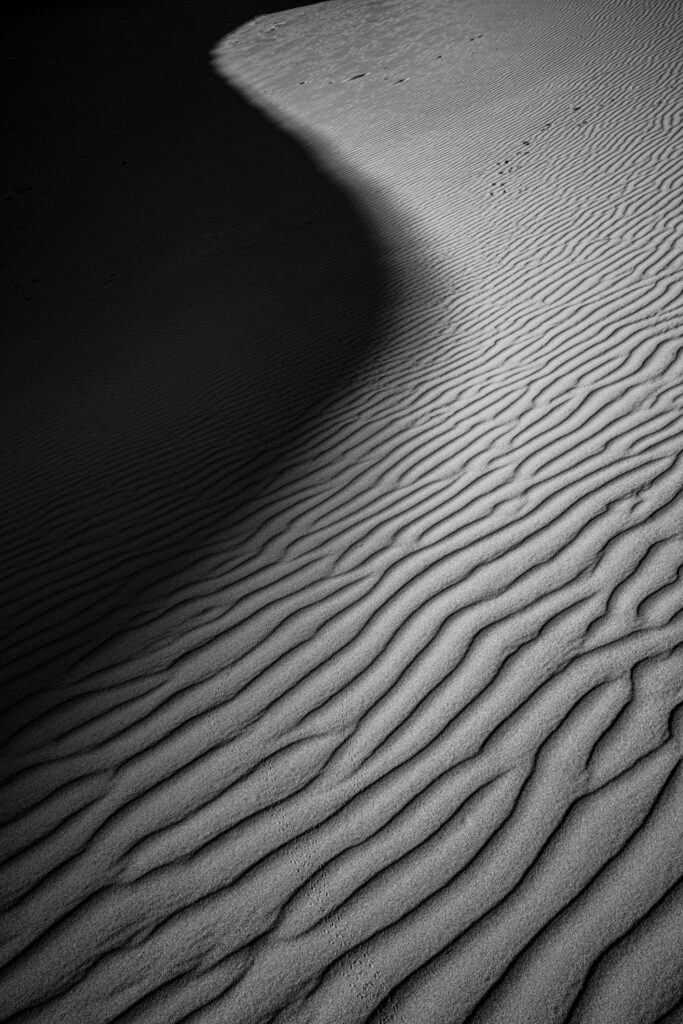
Black and white prints:
Acrylic Prints
Acrylic prints have a glossy, modern appearance. They can make black and white photographs look deep, crisp, and high contrast.
Pros of Acrylic
- Strong modern visual impact
- High contrast and depth
- Suitable for contemporary interiors
- Good for receptions, offices, showrooms, and modern homes
- Often works well as a statement piece
Cons of Acrylic
- Reflections can be a problem
- Glossy surfaces may not suit calm or traditional interiors
- Fingerprints and cleaning require care
- It can feel less subtle than fine art paper
Best Use Cases
Choose acrylic if you want the print to feel contemporary, polished, and visually strong.
Metal Prints
Metal prints are durable, sleek, and modern. They can work well in offices, public spaces, industrial interiors, and contemporary homes.
Pros of Metal Prints
- Durable surface
- Clean frameless appearance
- Good for modern and commercial spaces
- Usually lightweight relative to some framed options
- Resistant to some handling issues compared with paper prints
Cons of Metal Prints
- Can feel cold or technical
- Not ideal for every interior style
- Surface finish affects the final tonal quality
- Some black and white photographs may look too hard or metallic
Best Use Cases
Choose metal if you want durability, a modern look, and a frameless presentation.
How to Choose the Right Material
Quick Decision Guide
| If You Want… | Choose… |
|---|---|
| The most classic photographic look | Fine art paper |
| A complete artwork ready to hang | Framed fine art print |
| A softer decorative look | Canvas |
| A modern glossy statement | Acrylic |
| A durable contemporary panel | Metal |
| A refined interior design result | Fine art paper in a quality frame |
| Minimal reflections | Canvas or a matte/framed solution |
| Maximum contrast and impact | Acrylic or high-contrast fine art print |
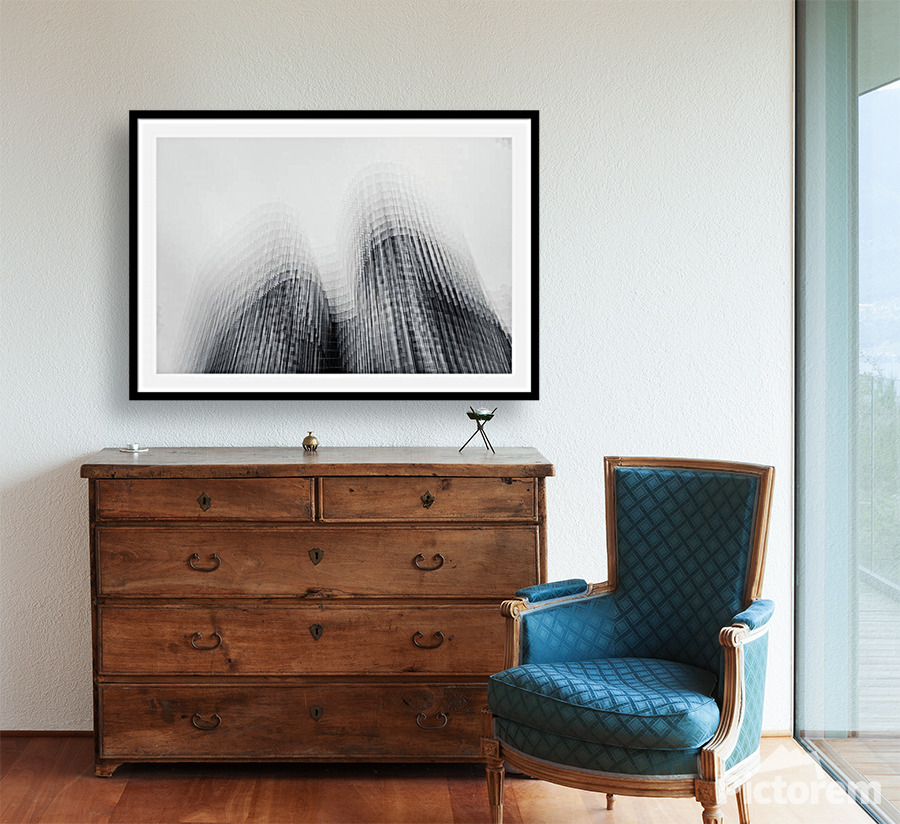
Framing: How to Choose the Right Frame
The frame can either support the photograph or distract from it. With black and white photography, simple frames often work best.
Black Frames
A black frame is the most universal choice for black and white photography. It creates a clear border and strengthens the visual presence of the print.
Best for:
- Modern interiors
- Minimalist spaces
- Industrial interiors
- Strong black and white contrast
- Offices and galleries
White Frames
A white frame feels lighter and softer. It works well when the room is bright and you do not want the frame to dominate.
Best for:
- Scandinavian interiors
- White walls
- Bedrooms
- Soft grayscale photographs
- Calm spaces
Natural Wood Frames
A natural wood frame adds warmth. It is useful when the room contains wood furniture, natural fabrics, plants, or earthy materials.
Best for:
- Natural interiors
- Scandinavian spaces
- Soft landscapes
- Organic subjects
- Homes with wooden furniture or floors
Dark Wood Frames
Dark wood feels more elegant and traditional than black metal or black painted wood.
Best for:
- Studies and libraries
- Elegant living rooms
- Hotels
- Classic interiors
- Darker color palettes
Frameless Presentation
Frameless presentation works best with acrylic, metal, or canvas. It can also be appropriate in very modern interiors.
It is usually not the best choice for loose fine art paper unless the print is mounted professionally.
Matting: Should You Use a Mat?
A mat, also called a passe-partout, is the border placed between the photograph and the frame. It creates breathing space around the image.
When to Use a Mat
Use a mat when you want:
- A more classic gallery look
- More visual space around the photograph
- A refined transition between image and frame
- A smaller print to feel more substantial
- A softer presentation
When to Avoid a Mat
Avoid or reduce matting when:
- The print is already very large
- You want a modern edge-to-edge look
- The photograph should feel direct and immersive
- The frame is minimal and the image itself should dominate
White or Warm White Mat?
For black and white photography, mat color matters. A mat that is too warm can look slightly yellow next to bright white tones in the photograph. A pure white mat feels cleaner and more modern, while a warmer mat can soften the result in traditional or natural interiors.
Glass, Acrylic Glazing, and Print Protection
Large framed prints need protection, but the choice of glazing affects weight, safety, reflections, and handling.
Glass
Glass is traditional and scratch-resistant, but it becomes heavy and fragile in large sizes.
Pros
- Classic appearance
- Good scratch resistance
- Clear protection
Cons
- Heavy in large formats
- Breakable
- Can create reflections
- More difficult and risky to ship
Acrylic Glazing / Plexiglass
Acrylic glazing is often practical for larger framed prints.
Pros
- Lighter than glass
- Safer for shipping and installation
- Better for large frames
- Less likely to shatter
Cons
- Can scratch more easily than glass
- Must be cleaned carefully
- Can still create reflections
Anti-Reflective Options
If the print will hang opposite a window or strong light source, consider an anti-reflective option or a different placement. Reflections are especially visible in dark areas of black and white photographs.
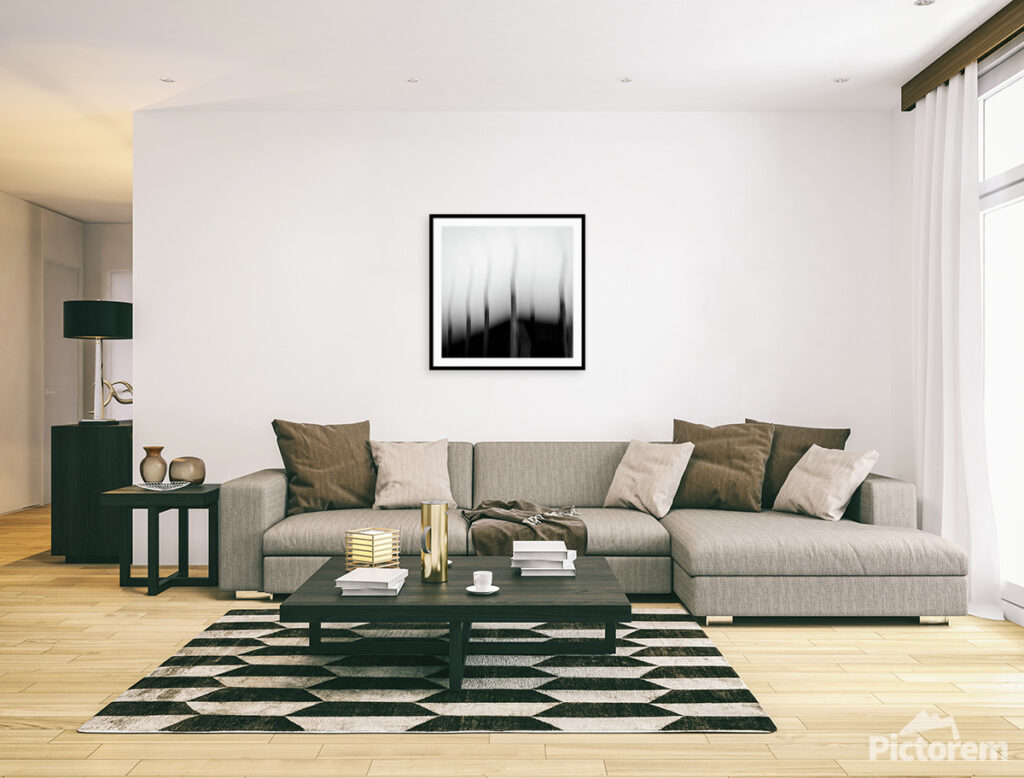
Where to Place a Large Black and White Print
Living Room
A living room is one of the best places for a large black and white photography print. The print can become the main visual anchor of the space.
Good placements:
- Above the sofa
- Above a sideboard or cabinet
- On the main empty wall
- Opposite the entrance to the room
- Near a reading corner
For living rooms, both calm and dramatic prints can work. The best choice depends on whether the room needs softness, structure, contrast, or a strong focal point.
Bedroom
Bedrooms usually benefit from quieter images.
Good subjects:
- Misty landscapes
- Water
- Trees
- Snow
- Abstract natural details
- Soft architectural forms
- Minimal compositions
Good placements:
- Above the bed
- Opposite the bed
- Above a low dresser
- On a side wall with soft lighting
Avoid images that feel too busy if the bedroom should feel restful.
Home Office
A black and white print in a home office can make the space feel more personal and professional.
Good subjects:
- Architecture
- Abstract details
- Calm landscapes
- Geometric forms
- Minimal nature photography
A large print can also create a strong background for video calls.
Corporate Office
In corporate interiors, large black and white photography can add character without overwhelming the space.
Good placements:
- Reception wall
- Meeting room
- Executive office
- Corridor
- Client waiting area
- Breakout zone
Choose images that are distinctive but not visually chaotic. In client-facing spaces, the print should feel confident and professional.
Hotel, Apartment, or Airbnb
Hospitality interiors benefit from artwork that feels intentional and high quality.
Black and white photography can make a room feel more refined without making it too personal.
Good choices:
- Landscapes
- Local scenes if relevant
- Abstract textures
- Calm architecture
- Nature details
A large print can increase the perceived value of a room more effectively than several generic decorations.
Restaurant, Café, or Studio
For public-facing spaces, the print should support the identity of the place.
Examples:
- A calm café may work well with soft, atmospheric photography
- A modern showroom may need a large high-contrast print
- A creative studio can use more experimental or abstract images
- An elegant restaurant may benefit from subtle framed fine art prints
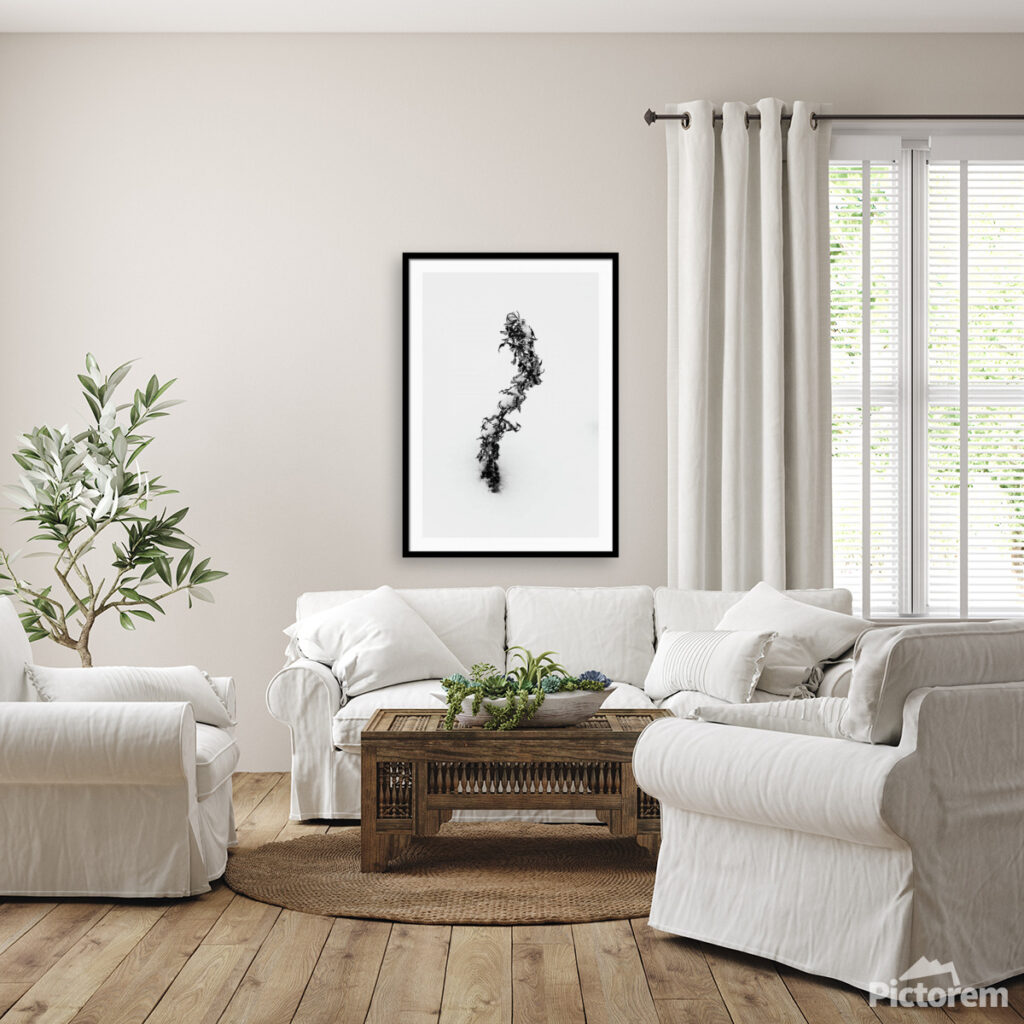
How High Should You Hang a Large Print?
A common rule is to hang artwork so that the center of the image is at eye level. In many interiors, this means the center of the print is around 145–155 cm / 57–61 in from the floor.
This is only a guideline. The correct height depends on the room and nearby furniture.
Above a Sofa
Do not hang the print too high. A typical gap between the top of the sofa and the bottom of the frame is around 15–25 cm / 6–10 in.
Above a Bed
The bottom of the frame should relate to the headboard. Leave enough space so the print feels connected to the bed but not crowded by pillows or bedding.
In a Hallway
Use eye level as the main reference. If hanging several prints, align their centers or create a clear top or bottom line.
In a Meeting Room
Consider whether people will mainly view the print while seated. In some meeting rooms, a slightly lower placement may feel more natural.
Lighting and Reflections
Lighting can make a large print look exceptional, or it can make it difficult to see.
Avoid Long-Term Direct Sunlight
Do not place fine art prints where they receive strong direct sunlight for long periods. Sunlight can reduce the longevity of printed materials and create harsh reflections.
Watch for Reflections
Reflections are especially noticeable in dark areas of black and white photographs. Before ordering a glossy or glazed print, check whether the artwork would face:
- A large window
- A glass door
- A strong ceiling light
- A spotlight from the wrong angle
- A bright opposite wall
Consider Dedicated Art Lighting
Good lighting can improve the presence of a print.
Options include:
- Picture lights
- Track lighting
- Adjustable spotlights
- Soft indirect lighting
- Wall washers
The goal is not to over-light the print, but to make the tones and details visible without glare.
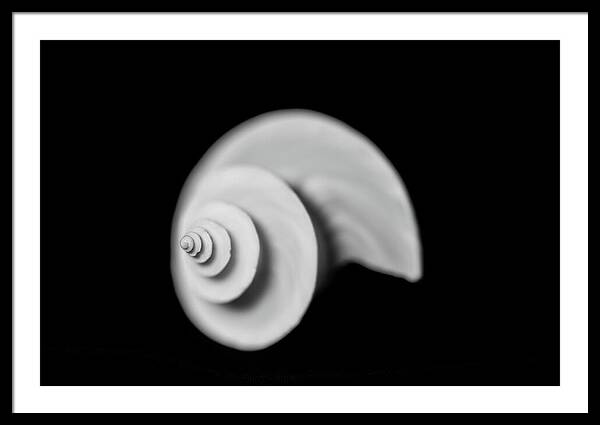
One Large Print or Several Smaller Prints?
Both options can work, but they create different effects.
One Large Print
Advantages
- Stronger visual impact
- Cleaner and calmer result
- Easier to place above furniture
- Works well in minimalist interiors
- Feels intentional and confident
Possible Drawbacks
- Requires more careful size selection
- Shipping and installation can be more demanding
- The image choice matters more because it dominates the space
Several Smaller Prints
Advantages
- Good for hallways and long walls
- Can create a visual story
- Easier to transport and install
- Allows more variety
- Useful for gallery walls
Possible Drawbacks
- Can look busy if not planned well
- Requires consistent spacing and framing
- Too many strong images can compete with each other
How to Combine Several Black and White Prints
If you combine multiple prints:
- Use the same frame style
- Keep consistent spacing
- Choose photographs with compatible tonality
- Avoid mixing too many visual styles
- Decide whether the arrangement should be symmetrical or more organic
- Do not place several very dominant images too close together
How to Recognize a High-Quality Large Photography Print
A large print reveals everything: the beauty of the photograph, but also technical weaknesses. Quality matters more at large sizes.
Image Quality
A good large-format photograph should have:
- Strong composition
- Enough resolution for the intended size
- Good tonal range
- Clean black and white conversion
- Detail where detail is important
- No distracting technical flaws
- A subject that remains interesting at scale
Not every good photograph works as a large print. Some images are beautiful small but become visually weak when enlarged. Others become more powerful with scale.
Print Quality
Look for:
- High-quality printing technology
- Suitable paper or material
- Neutral black and white tones
- No unwanted color cast in gray areas
- Good detail in shadows and highlights
- Archival-quality materials when possible
Framing Quality
For framed prints, check:
- Frame strength
- Clean corners
- Proper mounting
- Suitable glazing
- Secure hanging system
- Professional finish
A cheap frame can make even a beautiful photograph look ordinary.
Packaging and Shipping
Large prints require careful packaging. Framed prints, acrylic prints, metal prints, and large paper prints each need different protection during transport.
For interior designers and client projects, this is especially important because damaged artwork can delay installation.
Open Edition vs. Limited Edition Prints
When buying photographic prints, you may see terms such as open edition and limited edition.
Open Edition Prints
An open edition print is not limited to a specific number of copies.
Advantages
- Usually more affordable
- Good for interior decoration
- Easier to order in different sizes
- Suitable for homes, offices, hotels, and commercial spaces
Possible Drawbacks
- Less exclusive
- Usually lower collector value
Limited Edition Prints
A limited edition print is produced in a fixed number of copies.
Advantages
- More exclusive
- More collectible
- Often signed and numbered
- Suitable for premium interiors and collectors
Possible Drawbacks
- Higher price
- Less flexibility if editions are tied to specific sizes
- Availability may be limited
For most interior projects, the most important factors are the image, size, material, and placement. For premium spaces or collectors, limited editions can add an extra level of uniqueness.
How to Order a Large Black and White Photography Print
Ordering a large print becomes much easier when you follow a clear process.
Step 1: Choose the Photograph
Start with the atmosphere you want to create.
Ask yourself:
- Should the room feel calmer or more dramatic?
- Should the print be the main focal point?
- Does the subject match the style of the interior?
- Will the image work from both far away and close up?
- Does the photograph feel right for the purpose of the room?
Step 2: Choose the Size
Measure the wall and nearby furniture. Then test the size with painter’s tape or a paper template.
Do not choose a size only because it is safe. A print that is too small is one of the most common mistakes in interior decoration.
Step 3: Choose the Material
Use the material guide:
- Fine art paper for a classic gallery-quality result
- Framed fine art print for a complete ready-to-hang artwork
- Canvas for a softer decorative look
- Acrylic for a modern glossy statement
- Metal for a durable contemporary panel
Step 4: Choose the Frame or Finish
If you choose a framed print, match the frame to the interior.
Consider:
- Wall color
- Furniture materials
- Flooring
- Other frames in the room
- Whether the print should blend in or stand out
Step 5: Check the Placement
Before ordering, confirm:
- Wall size
- Print size
- Hanging height
- Viewing distance
- Sunlight
- Reflections
- Installation method
Step 6: Ask for Advice if Needed
If you are unsure about the right size, material, or photograph, it can help to send a photo of the wall or describe the space. This is especially useful for large prints and interior design projects.
For Interior Designers
Large black and white photography prints are useful tools in interior design because they can create strong visual impact without adding another color to the palette.
They can help you:
- Create a focal point in a room
- Add contrast to a neutral interior
- Bring depth to minimalist spaces
- Support a calm and refined atmosphere
- Give a project a more personal and artistic character
- Offer clients something more distinctive than generic wall decor
- Connect different rooms through a consistent visual language
Interior Designer Checklist
Before choosing a print for a client project, collect:
- Wall dimensions
- Furniture dimensions
- Ceiling height
- Viewing distance
- Interior style
- Color palette and materials
- Lighting conditions
- Desired atmosphere
- Budget
- Deadline
- Installation requirements
- Preferred frame or material
- Whether the client wants open edition or limited edition artwork
Practical Tip for Client Presentations
For client approval, prepare a simple wall mockup. Even a rough visualization can make it much easier for clients to understand scale and choose confidently.
Common Mistakes When Choosing Large Black and White Prints
Mistake 1: Choosing a Print That Is Too Small
This is the most common mistake. A small print on a large wall can look accidental, even if the photograph itself is beautiful.
Mistake 2: Hanging the Print Too High
Artwork placed too high feels disconnected from the furniture and the room. This often happens above sofas, beds, and cabinets.
Mistake 3: Ignoring Reflections
Glossy surfaces, glass, and acrylic can reflect windows and lights. Always consider the light in the room before choosing the material.
Mistake 4: Choosing the Wrong Material
Acrylic may look great in a modern office but too glossy in a calm bedroom. Fine art paper may look beautiful in a living room but needs suitable protection in a busy public space.
Mistake 5: Choosing a Photograph Without Considering the Room
A photograph can be beautiful on its own but wrong for a particular space. Always consider mood, scale, contrast, and placement.
Mistake 6: Using Too Many Strong Images Together
Several bold black and white photographs placed close together can compete with each other. If you use multiple prints, create a clear visual system.
Mistake 7: Using Poor-Quality Framing
The frame is part of the artwork. Low-quality framing can reduce the impact of the print and make the entire interior feel less refined.
Pre-Order Checklist
Before ordering a large black and white photography print, answer these questions:
- Where will the print hang?
- What are the wall dimensions?
- Will the print hang above furniture?
- How wide is the sofa, bed, desk, or cabinet below it?
- From what distance will people usually view it?
- Should the print be a subtle accent or the main focal point?
- Should the image feel calm, dramatic, minimal, elegant, or bold?
- Is a horizontal, vertical, square, or panoramic format best for the wall?
- Is there direct sunlight on the wall?
- Will windows or lights create reflections?
- Which material fits the room best?
- Should the print be framed?
- What frame color works with the furniture and interior materials?
- Do you need a ready-to-hang artwork?
- Have you tested the size on the wall with tape or a paper template?
- Do you need help choosing the right photograph or size?
Quick Decision Guide
If You Want the Most Gallery-Like Result
Choose a fine art paper print in a high-quality frame.
If You Want a Ready-to-Hang Solution
Choose a framed fine art print.
If You Want a Modern, High-Impact Look
Consider acrylic or metal.
If You Want a Softer Decorative Look
Consider canvas or a naturally framed fine art print.
If You Have a Large Empty Wall
Do not be afraid of one large statement print. It may look cleaner than several small pieces.
If You Are Decorating an Office or Reception
Choose a print that feels professional, distinctive, and not too visually chaotic.
If You Are Unsure About Size
Mark the dimensions on the wall with painter’s tape and look at the outline from different parts of the room.
FAQ: Large Black and White Photography Prints
What size should I choose for a large black and white photography print?
The right size depends on the wall, the furniture, and the viewing distance. Above a sofa or bed, a useful guideline is to choose artwork that is around 60–75% of the furniture width. On a large empty wall, one oversized print can often look more intentional than several smaller decorations.
Are black and white prints good for modern interiors?
Yes. Black and white photography works especially well in modern interiors because it adds contrast, structure, and visual depth without introducing new colors. It pairs well with minimalist, industrial, Scandinavian, and elegant interiors.
Should I choose a framed print or an unframed print?
Choose a framed print if you want a finished artwork that is ready to hang. Choose an unframed print if you want to arrange custom framing yourself or if you have a specific framing solution planned.
Is fine art paper better than canvas?
Fine art paper usually offers a more refined and gallery-like photographic result, especially for black and white images with subtle tonal detail. Canvas has a softer and more decorative look. The better choice depends on the room and the atmosphere you want.
Can large black and white prints work in small rooms?
Yes. A single large print can make a small room feel more intentional and less cluttered than several small decorations. The key is to choose the right subject, contrast, and placement.
How high should I hang a large photo print?
A common guideline is to place the center of the artwork around eye level, approximately 145–155 cm / 57–61 in from the floor. Above a sofa or bed, leave a reasonable gap so the print feels connected to the furniture rather than floating too high.
What frame color works best for black and white photography?
Black frames are the most universal choice. White frames feel lighter and softer. Natural wood adds warmth. Dark wood creates a more elegant and classic appearance.
Are large black and white prints suitable for offices?
Yes. They are a strong choice for offices, meeting rooms, receptions, and client-facing spaces because they feel professional, timeless, and visually refined without being distracting.
What is the best material for a large black and white print?
For a classic fine art result, choose fine art paper. For a ready-to-hang artwork, choose a framed print. For a modern glossy look, choose acrylic. For durability and a contemporary style, choose metal. For a softer decorative result, choose canvas.
How can I avoid ordering the wrong size?
Measure the wall and mark the planned print size with painter’s tape before ordering. View it from different positions in the room. If the print will hang above furniture, compare its width with the furniture below it.
Can interior designers order prints for client projects?
Yes. Large black and white photography prints are well suited for interior design projects. Designers can choose prints based on wall size, material palette, lighting, atmosphere, and the client’s preferred level of visual impact.
Final Thoughts
A large black and white photography print can be one of the strongest elements in an interior. It can make a room feel calmer, more elegant, more dramatic, or more complete. But the best result does not come only from choosing a beautiful photograph.
Size, material, framing, light, and placement all matter.
Start with the room. Measure the wall. Think about the atmosphere you want to create. Test the size before ordering. Choose a material that fits the space. If you are unsure, ask for guidance before making the final decision.
A well-chosen large black and white print should not feel like something added at the end. It should feel like it belongs in the room.