
Architecture Photography Prints
Architecture interests me less as something to document completely and more as a source of shape, rhythm, light, shadow, and geometry. A façade can become a pattern, a staircase a spiral, a building a silhouette, and a familiar landmark can change completely when photographed through movement or unusual framing.
This collection of architecture photography prints includes minimalist and abstract architecture, historic and modern buildings, Brutalist structures, sacred interiors, urban details, and architectural photography from Prague, elsewhere in the Czech Republic, Mongolia, Egypt, Italy, and other places.
I often simplify buildings until their function or location becomes secondary. What remains may be a line, repeated windows, a shadow, a curved surface, or the relationship between architecture and the space around it.

Worldwide shipping – printed in 5 countries

11 sizes available

100+ frames & mounts

6 material options

High-quality print by Fine Art America

30-day money-back guarantee
Showing all 44 results


How I Approach Architecture Photography
I rarely feel the need to show a building completely.
What usually attracts me first is one visual relationship: the repetition of windows, a shadow crossing a wall, the curve of a roof, a narrow opening, a staircase, a silhouette, or the way a structure meets the surrounding landscape.
Once I find that element, I often remove as much competing information as possible.
This makes my approach to architecture closely related to my Minimalist Photography Prints and Abstract Photography Prints.
When a Building Stops Being Only a Building
Architecture becomes especially interesting to me when recognition is no longer the most important part of the photograph.
A façade can become rhythm. Windows can become a grid. A roof can resemble a landscape. Columns can turn into repeated vertical forms. Light and shadow can divide a wall into a composition that works independently from the building itself.
The architecture remains real, but the photograph begins to function more through visual structure than through description.
I explore this approach in greater depth in my article When Architecture Becomes Abstract.
Prague: Photographing a City I Know Well
A large part of this collection comes from Prague, where I live.
That familiarity is both useful and difficult. I can return to the same streets and buildings repeatedly, but famous Prague architecture has already been photographed from almost every conventional viewpoint.
I therefore often look for fragments, unusual light, silhouettes, reflections, abstraction, or temporary situations that make a familiar building feel different.
Minimalist Architectural Detail, for example, began with two yellow metal elements on an otherwise inconspicuous corner. Evening light and shadow simplified the scene until the functional detail became the main composition.
In Prague Castle – Abstract Architectural Photography, I used intentional camera movement during a long exposure to transform one of the city’s most recognizable landmarks into a much less literal image.
Explore more location-specific work in my Prague Photography Prints.
Brutalism, Concrete and Strong Geometry
Brutalist architecture is particularly suitable for the way I photograph because its structure is often visually clear even when the wider context disappears.
Concrete surfaces, repeated modules, sharp angles, deep shadows, and monumental volumes can create strong compositions from relatively small architectural fragments.
In photographs of Prague buildings such as Centrotex or the distinctive towers of the Emauzy Monastery, I am less interested in producing a neutral architectural record than in emphasizing geometry, weight, contrast, and sculptural presence.
This kind of architecture often works particularly well in black and white because colour is secondary to the structure.
For more work centred on lines and repeated forms, browse my Geometry Photography Prints.
Historic and Sacred Architecture
Historic architecture creates a very different visual language.
Instead of exposed concrete and modern grids, there may be arches, vaults, stone surfaces, towers, narrow windows, and complex relationships between light and interior space.
The Corpus Christi Chapel photographs from Kutná Hora are examples where ribbed Gothic vaults and repeated arches create both spatial depth and strong geometry.
In sacred architecture, I am often interested in the quietness of the space as much as the building itself. Natural light, symmetry, repetition, and darkness can give an interior a contemplative quality without requiring decorative excess.
You can explore more of these subjects in my Church Photography Prints and Religious Photography Prints.
Architecture and Landscape
I am particularly interested when a building cannot be separated visually from the landscape around it.
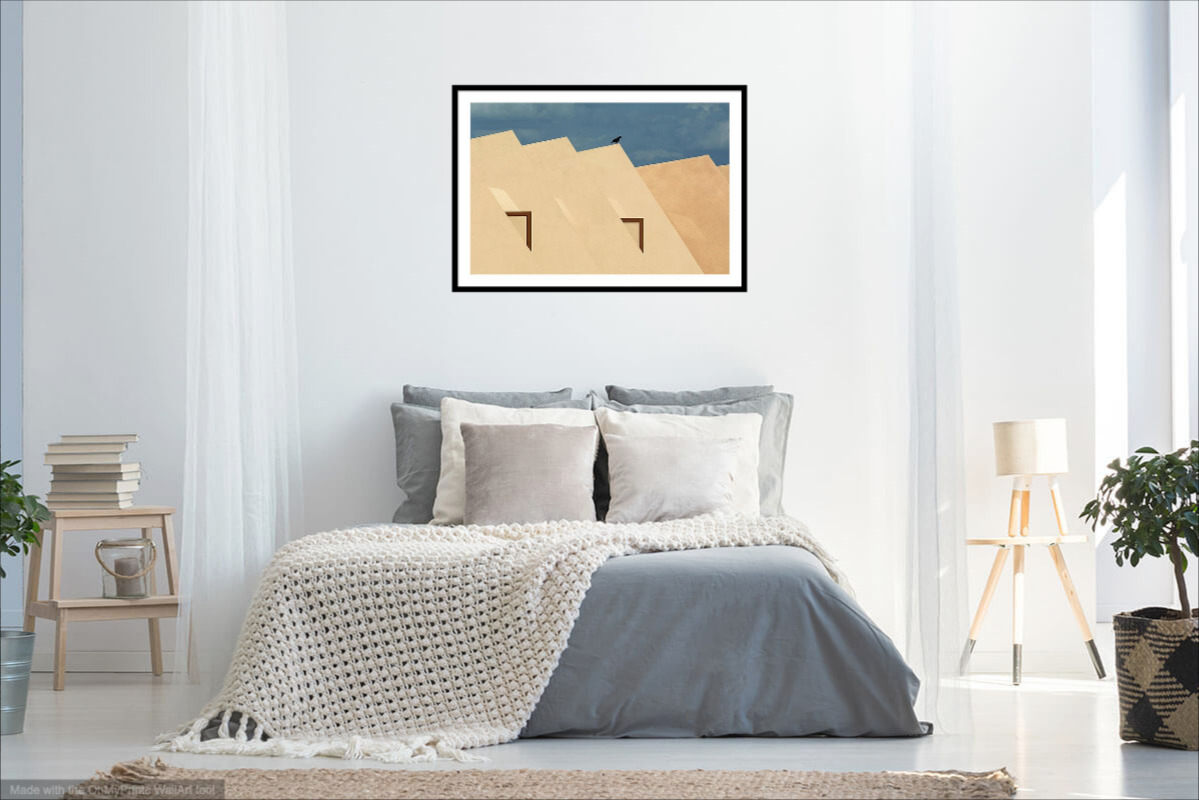
Desert House, photographed in Mongolia’s Gobi Desert, is one of my favourite examples. A modern building appears in an enormous dry landscape where there are very few other signs of permanent architecture. A bird sitting on the roof adds another small element to an already reduced composition.
The building is important, but so is everything that is absent around it.
Architecture can also resemble landscape itself. A curved modern roof may begin to look like dunes or hills when the rest of the building is removed from the frame.
This overlap between human-made structure and natural form is one of the reasons architecture fits naturally within my broader photographic work.
Architecture Can Be Minimal Without Being Modern
Minimalist architectural photography does not require minimalist architecture.
An ornate historic building can produce a very simple photograph if I isolate one window, arch, shadow, roofline, or silhouette.
Conversely, a visually simple modern building can produce an extremely complicated photograph if too much surrounding information is included.
For me, minimalism is therefore primarily a question of the photograph rather than the architectural style.
The important question is how much information the image actually needs.
Light Can Be More Important Than the Building
Architecture changes constantly even though the structure itself remains still.
The reason is light.
A wall that looks visually unremarkable in flat illumination may become interesting when a narrow band of sunlight crosses it. Deep shadow can isolate one architectural element and remove everything around it. Reflected light can change the apparent colour and volume of a surface.
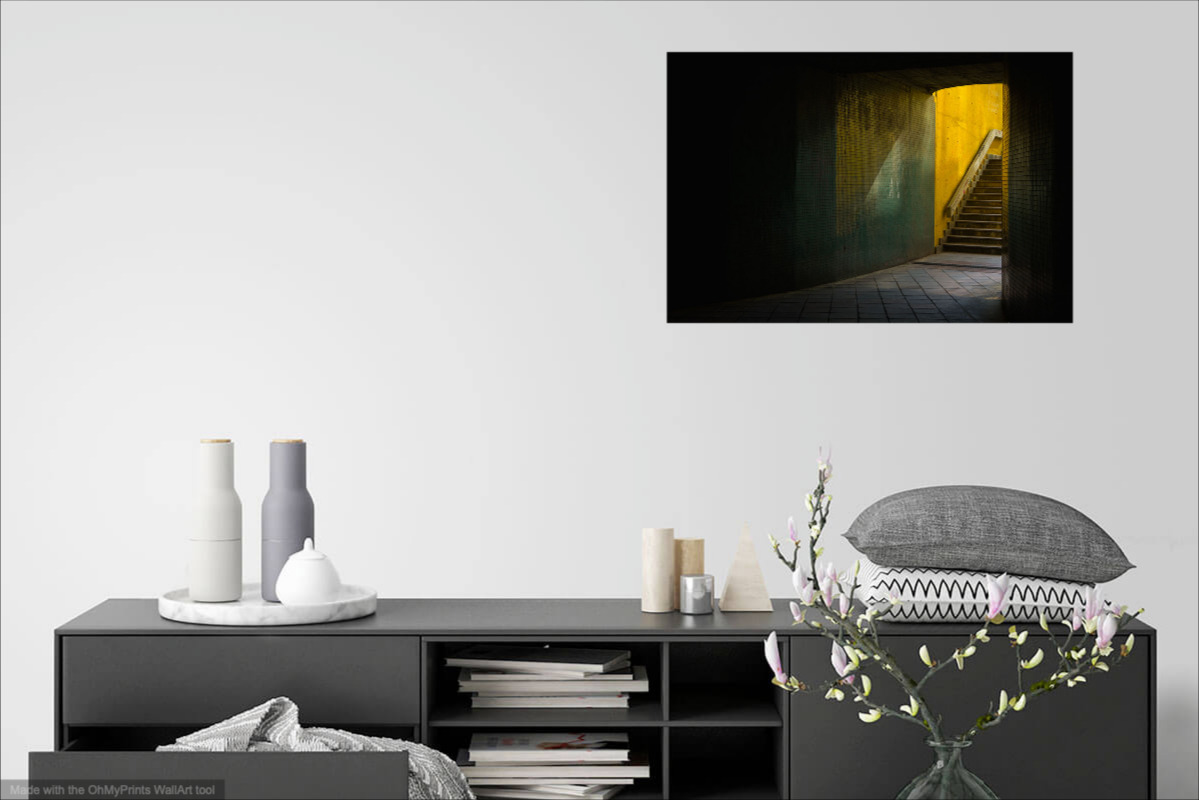
Dark Underpass in Prague is a good example. The location itself is an ordinary pedestrian underpass near Vltavská metro station. What made the scene worth photographing was sunlight entering the staircase at a particular angle while much of the surrounding space remained dark.
The photograph exists because of a temporary relationship between permanent architecture and temporary light.
Reflections Can Break Architectural Order
Architecture usually suggests stability and precision, but reflections can make it visually unstable.
Glass façades reflect clouds, neighbouring buildings, sunlight, and sky. Individual window panels may reflect the same scene at slightly different angles, turning an ordered grid into a fragmented image.
This contrast interests me because two visual systems exist at once: the fixed geometry of the building and the constantly changing reflected environment.
You can explore related work in my Reflection Photography Prints.
Using Movement to Photograph Static Buildings
Architecture is physically static, which makes intentional movement an interesting way to photograph it.
With Intentional Camera Movement, I deliberately move the camera during the exposure. Straight architectural forms stretch, merge, and become less stable.
I have used this approach with Prague Castle, the Dancing House, church architecture, and unfinished concrete structures.
The purpose is not simply to add blur. I use movement when it helps a familiar structure become something less descriptive and more open to interpretation.
In-Camera Multiple Exposure and Architecture
Multiple exposure offers another way of disrupting architectural stability.
By combining several exposures directly in the camera, a regular façade or skyscraper can repeat, shift, and overlap with itself.
The building remains recognizable, but its geometry becomes layered and slightly unstable.
I especially like the contrast between a precisely engineered structure and the small imperfections created by handheld movement between exposures.
You can see more of this approach in my Multiple Exposure Photography Prints.
Black and White or Colour?
A large part of my architectural work is black and white because architecture often depends strongly on form, shadow, material, and geometry.
Removing colour can simplify a façade, strengthen a silhouette, or make repeated structures easier to read.
But colour can also be the reason I make the photograph. Yellow architectural details in Prague, green doors, the blue and yellow Žďákov Bridge, or warm architecture in Egypt would lose an important part of their visual identity in monochrome.
I therefore use black and white when structure is dominant and keep colour when hue is part of the composition itself.
Explore more monochrome work in my Black & White Photography Prints.
Architecture and Street Photography Overlap
The boundary between architectural and street photography is not always clear.
A staircase, passage, wall, bridge, or façade can provide the structure of an image while a person, bird, shadow, or temporary event gives it meaning.
I think of these photographs as architecture when the built environment remains essential to the composition. When the temporary street moment becomes the main subject, the same photograph may fit more naturally within my Street Photography Prints.
For a broader view of urban environments, you can also explore my City Photography Prints.
Architecture Photography Prints – Visualizations
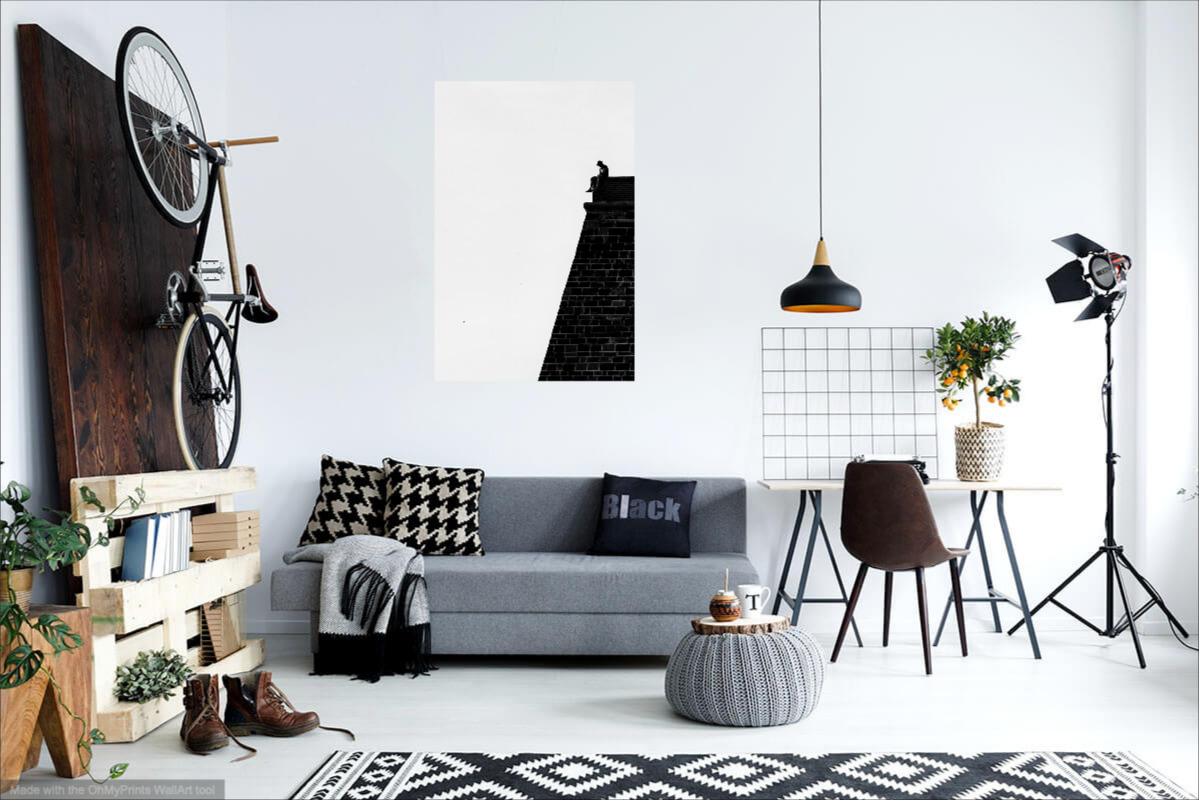
I selected a few examples to show how my architectural photographs can look in an interior. Different images work in different ways: some feel clean and graphic, others quieter and more atmospheric, and some become stronger focal points because of contrast or scale.
-
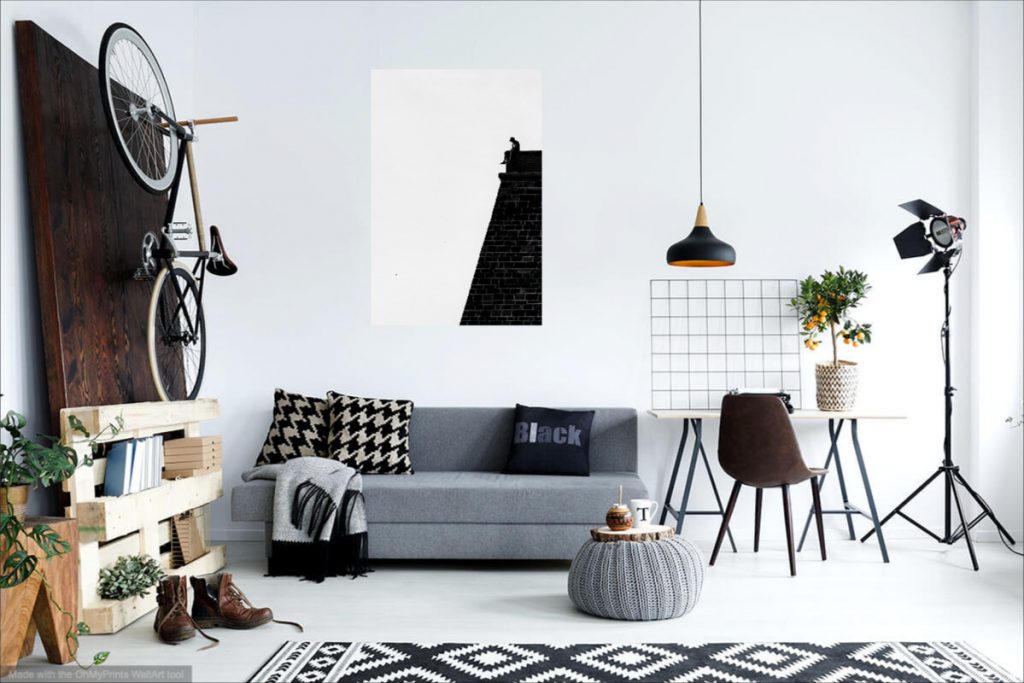
Minimalistic and simple architectural photography on the wall of a modern apartment. -
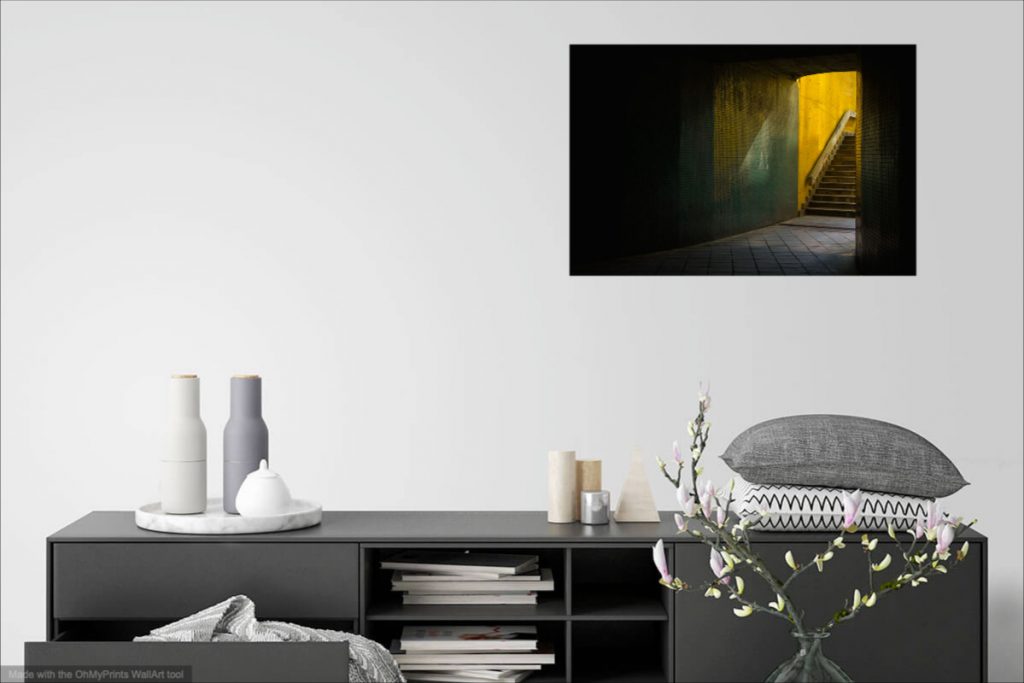
Simple visualization of minimalist architectural photography in a modern apartment. -
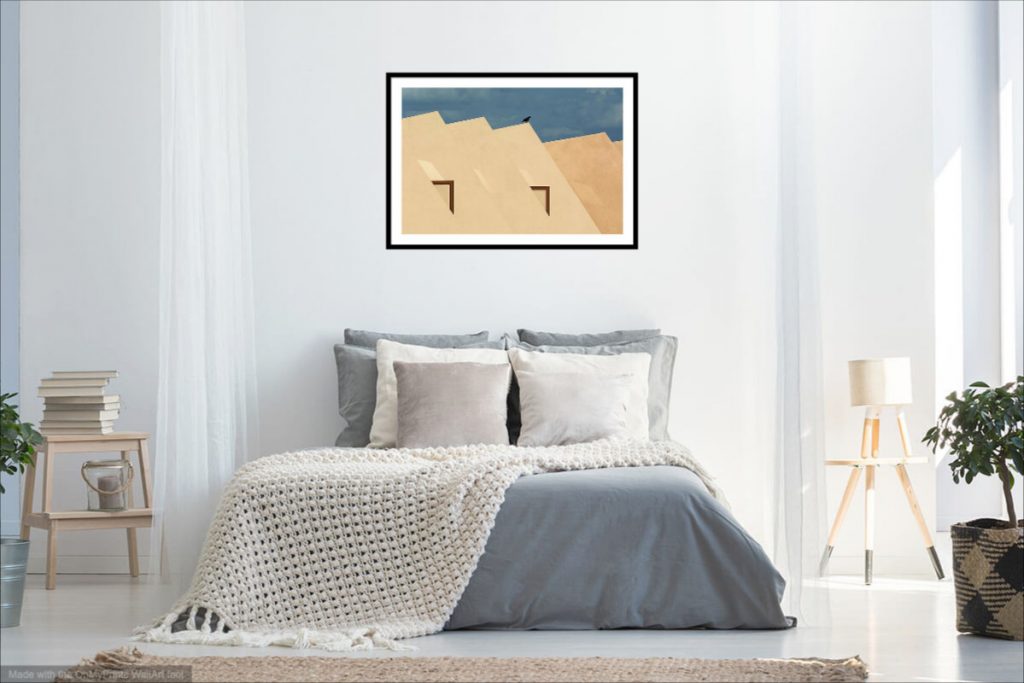
Wall art decoration – “The Hotel in the Gobi” on the wall of a clean bedroom interior. -
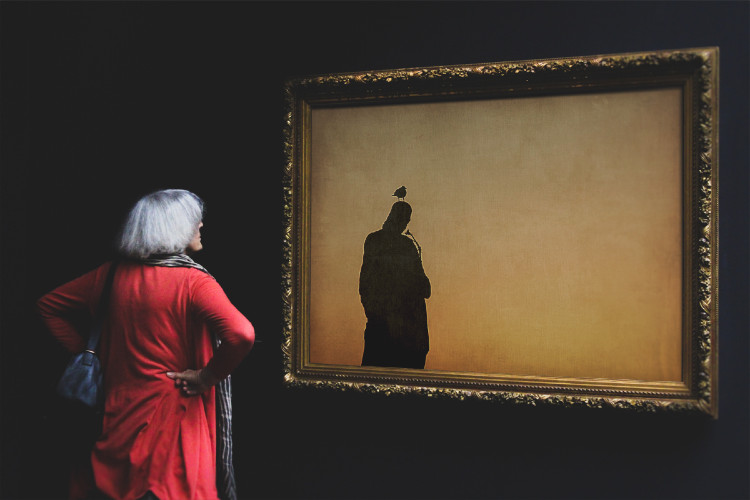
Visualization of minimalist architectural photography on the gallery wall.
Choosing an Architecture Photography Print
Architectural photographs can create very different effects in an interior depending on how literal, geometric, dark, or abstract they are.
Minimalist architectural photographs with generous negative space are visually restrained and work well when you want structure without too much detail.
Black-and-white architecture emphasizes form and contrast and is relatively easy to combine with existing interior colours.
Abstract architecture works well when you prefer artwork that does not immediately reveal the building or location.
Colour architecture can become a much stronger part of the room’s palette, particularly when the photograph contains a large yellow, blue, green, or orange surface.
Highly geometric photographs often benefit from larger print sizes because repeated windows, surfaces, textures, and small tonal differences become easier to appreciate.
Select any photograph above to see its available sizes, print materials, and framing options.
Frequently Asked Questions About Architecture Photography Prints
What types of architecture are included in this collection?
The collection includes modern and historic architecture, Brutalist buildings, churches and sacred interiors, bridges, urban details, abstract architecture, and minimalist architectural photography.
Where were these architectural photographs taken?
Many were photographed in Prague and elsewhere in the Czech Republic, with additional work from Mongolia, Egypt, Italy, and other places I have visited.
Why is much of your architectural photography abstract or minimalist?
I am often more interested in shape, light, geometry, repetition, and visual rhythm than in documenting an entire building. Isolating a fragment can sometimes reveal more about what attracted me to the structure than a complete view.
Do you manipulate architectural photographs digitally?
I use normal photographic post-processing, but effects such as intentional camera movement and multiple exposure are created during shooting. My multiple-exposure photographs are layered directly in the camera rather than assembled later as digital collages.
Why do you use black and white for architecture?
Black and white can remove unnecessary colour and make geometry, shadow, texture, volume, and contrast more prominent. I retain colour when it is an essential part of the photograph.
Where can I find more abstract architecture?
Browse my Abstract Photography Prints or read When Architecture Becomes Abstract for a more detailed explanation of my approach.